Personal Finance
Do The Richest Man in Babylon’s Lessons Still Work Today?
The Richest Man in Babylon was published a century ago, yet its central rules about saving, spending, investing, debt, and earning still feel surprisingly modern. This guide examines every major lesson, shows where the advice still works, and updates the parts that should not be followed literally today.
By Worth-the-cart
•
•
4 min read
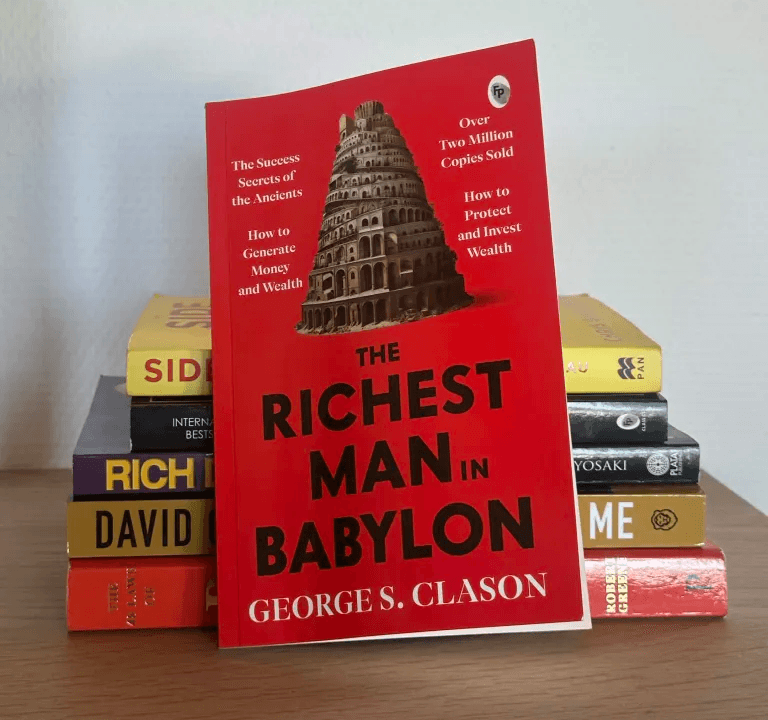

A century-old money book should feel hopelessly outdated. The Richest Man in Babylon talks about clay tablets, gold lenders, camel traders, and purses filled with coins—not 401(k)s, credit cards, index funds, or mortgage rates. Yet many people still struggle with exactly the problems its fictional citizens face: their income disappears, their spending expands, debt follows them, and attractive investments promise far more than they can safely deliver.
So, do the lessons from The Richest Man in Babylon still work today? Mostly, yes. Its strongest ideas—save before spending, control lifestyle inflation, invest consistently, avoid opportunities you do not understand, protect yourself from financial shocks, and improve your earning ability—remain useful because they address behavior rather than a specific financial product.
But the book is not a complete modern financial plan. Its recommendation to own a home is too universal. Its focus on keeping principal safe needs the modern concepts of risk tolerance and diversification. Saving 10% is an excellent starting rule, but it may be too little for a late starter and too difficult for someone facing high-interest debt or unstable income.
The right way to read the book today is not as ancient financial law. Read it as a simple operating system for money, then add the tools and protections that did not exist when George S. Clason published the book in 1926.
If you are building a reading list rather than examining only this book, WorthTheCart?’s guide to 25 books that could change your life, money, habits, and mindset puts it alongside other books with practical ideas worth testing.
The Short Answer: Which Rules Still Work?
The seven principles of The Richest Man in Babylon still provide a sensible foundation, but not every rule should be followed literally.
Rule from the book | Modern meaning | Does it still work? |
|---|---|---|
Keep part of everything you earn | Automate saving before discretionary spending | Yes, although 10% is a starting point rather than a universal target |
Control your expenses | Use a budget and resist lifestyle inflation | Yes |
Make your money multiply | Invest for long-term growth and reinvest returns | Yes, with diversification and an appropriate time horizon |
Protect your treasure | Understand risk and avoid reckless opportunities | Yes, but avoiding all risk can also be costly |
Make your home an investment | Consider building equity through ownership | Sometimes; renting can be the smarter choice |
Provide future income | Prepare for retirement and protect dependents | Absolutely |
Increase your ability to earn | Develop valuable skills and pursue better opportunities | Yes, and it may be the most underrated rule |
That table gives the conclusion, but it leaves out what makes the book useful. Clason does not present money as a collection of clever tricks. He presents wealth as the result of repeated decisions: keep a portion, spend with intention, put savings to work, reject foolish risk, prepare for trouble, and become more useful.
Those ideas sound obvious. Following them for years is not.
What Are the Rules in The Richest Man in Babylon?
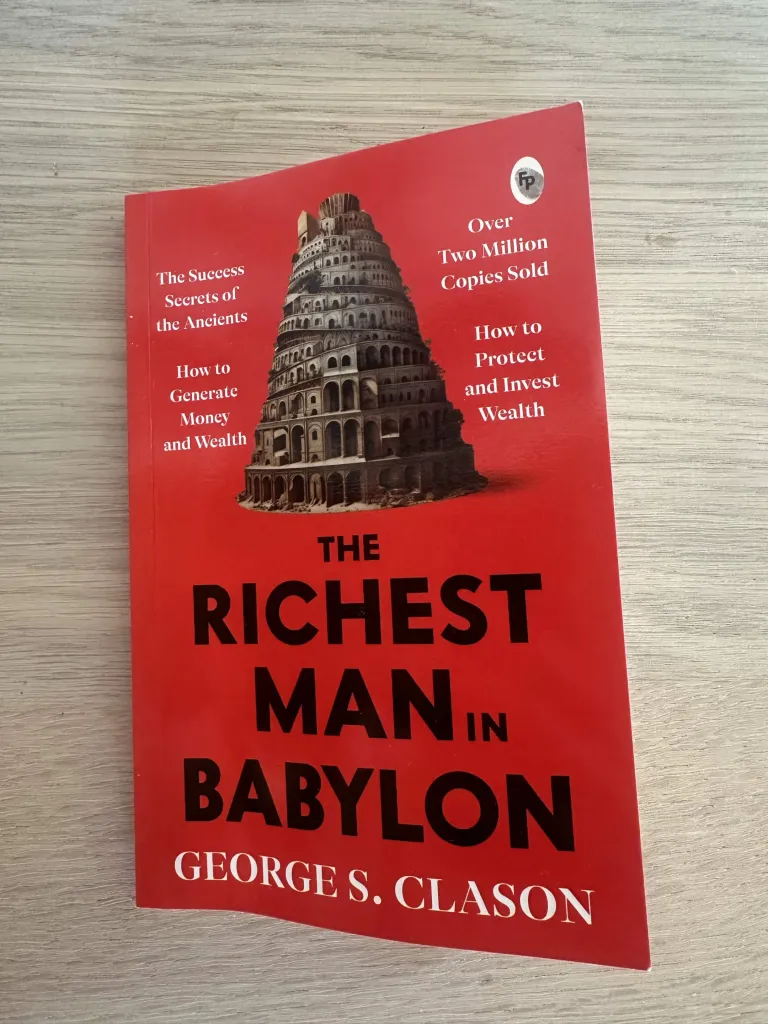
The book is a collection of financial parables set in an imagined version of ancient Babylon. Arkad, a poor scribe who becomes wealthy, teaches a group of citizens what the book calls the Seven Cures for a Lean Purse. A later section introduces the Five Laws of Gold, which largely reinforce the saving and investing lessons. Other stories explore lending, debt, protection, action, and work.
This distinction matters because readers sometimes search for The Richest Man in Babylon 10 rules or 7 rules, expecting one definitive list. The book actually contains several overlapping frameworks:
Seven cures focused on building financial stability.
Five laws focused on acquiring, growing, and protecting wealth.
Additional parables about opportunity, lending, debt repayment, protection, and earning.
The Seven Cures and Five Laws add up to 12 named principles, but some repeat the same core message. For example, the first cure and first law both emphasize consistently keeping at least one-tenth of what you earn. The book’s real value is not the exact number of rules; it is the way the stories make a small number of behaviors memorable.
It is also important to treat these stories as parables, not as documentary proof of how ordinary Babylonians managed money. Their ancient setting gives the lessons a timeless atmosphere, but the financial program is Clason’s.
Do the Seven Principles of The Richest Man in Babylon Work Today?
1. Keep at Least 10% of What You Earn
Arkad’s first lesson is simple: out of every ten coins earned, keep one. In modern language, pay yourself first by moving part of each paycheck into savings or investments before ordinary spending absorbs it.
This principle still works because it reverses the order most people use. If you spend first and promise to save whatever remains, everyday wants tend to consume the balance. When saving happens automatically on payday, the money never has to survive a month of temptations.
Imagine someone taking home $4,000 per month. Under the book’s rule, $400 moves automatically to a separate account and the person builds life around the remaining $3,600. After one year, that is $4,800 set aside before any interest or investment return.
The exact percentage is less important than the system. Someone living paycheck to paycheck might begin with 2% or a fixed $25 per payday and increase it gradually. Someone starting retirement saving at 45 may need far more than 10%. A worker receiving a full employer match in a 401(k) should also understand how that match changes the calculation.
There is another modern exception: expensive debt. If a credit card balance charges far more than a reasonable investment could be expected to return, blindly investing the full 10% while allowing that debt to compound can work against you. A small emergency cushion followed by aggressive high-interest debt repayment may be the better sequence.
Modern verdict: The habit works. The fixed percentage needs to fit the person.

2. Control Your Expenses Without Removing Everything You Enjoy
The second cure is often reduced to “make a budget,” but Clason’s more interesting observation is that expenses we call necessary tend to grow with income. Today we call that lifestyle inflation.
A raise can disappear into a better car payment, more delivery orders, upgraded subscriptions, and a more expensive apartment without producing any lasting sense of progress. The person earns more but remains unable to keep more.
The book’s answer is not joyless deprivation. Arkad tells his students to provide for necessities, worthwhile desires, and enjoyment within the portion available to spend. In other words, a budget is supposed to protect what matters from casual purchases—not punish you for wanting anything.
A useful modern version is to review the last 60 to 90 days of transactions and divide them into four groups:
Essentials that keep life functioning.
Commitments that are difficult to change quickly.
Spending that adds real enjoyment or value.
Spending you barely remember or would not choose again.
The last category is where painless savings often hide. A $15 subscription is not financially devastating by itself, but four forgotten subscriptions cost $720 per year. Add two unnecessary delivery orders each month and the leak becomes large enough to fund a starter emergency account.
Modern verdict: Still one of the strongest rules in the book. Spending awareness matters more than a perfect budgeting app.

3. Put Your Money to Work
Saving creates the seed; growth changes the result. Arkad explains this through a loan to Aggar, a shield maker who needs bronze for his trade. Because Aggar understands the business and repays the loan with a return, Arkad can reinvest both his original capital and what it earned.
The modern lesson is compounding. Depending on the goal and time horizon, money might be placed in an insured savings account, a certificate of deposit, a retirement account, Treasury securities, or a diversified investment portfolio. These are not interchangeable. Emergency money needs accessibility and stability, while retirement money may have decades to tolerate market fluctuations.
Consider a person earning $60,000 per year who directs 10% of gross income—$500 per month—toward long-term investments. The following illustration assumes a hypothetical 7% annual return compounded monthly. It ignores taxes, fees, inflation, and changing returns, so it is not a promise or forecast.
Time contributing | Amount personally contributed | Hypothetical balance at 7% |
10 years | $60,000 | About $86,500 |
20 years | $120,000 | About $260,500 |
30 years | $180,000 | About $610,000 |
The striking part is not the assumed rate. It is the widening gap between contributions and the ending balance as time increases. That is the modern version of Arkad’s money producing more money.
Returns are never guaranteed, and a real portfolio will move up and down. Still, the principle is sound: money intended for a long-term goal needs an opportunity to grow, not merely a place to sit.
Modern verdict: Completely relevant, provided the investment fits the goal, risk tolerance, fees, taxes, and timeline.

4. Protect Your Money From Loss
Early in Arkad’s journey, he gives money to a brickmaker who plans to buy jewels. The mistake is not simply that the deal fails. It is that the person making the purchase has no expertise in jewels. Arkad learns to seek guidance from people who understand the specific decision.
That story could have been written for the age of social-media stock tips, meme coins, unregistered investments, and strangers promising effortless returns. A persuasive personality is not proof of competence. Friendship is not due diligence. A large potential return does not make the probability of loss disappear.
The lesson still works, but “protect the principal” needs an update. Keeping every dollar in cash may avoid market volatility, yet long-term purchasing power can erode. Modern protection is not the elimination of all risk. It is the intelligent management of different risks.
That can include:
Keeping emergency money accessible rather than exposing it to market swings.
Diversifying long-term investments instead of depending on one company or asset.
Checking whether a financial professional or firm is properly registered.
Understanding fees, lockups, tax consequences, and the conditions for withdrawing money.
Refusing opportunities that rely on urgency, secrecy, or guaranteed high returns.
Using strong account security and monitoring financial accounts.
Remember, protect thy purse
Modern verdict: More relevant than ever, but diversification is a better interpretation than avoiding every investment that can fluctuate.

5. Make Your Home a Profitable Investment
This is the book’s most debatable rule. Arkad argues that regular payments should eventually produce ownership rather than continue going to a landlord. He also connects a home with security, lower future living costs, and a better life for the family.
The equity argument can still be valid. A fixed-rate mortgage may create more predictable principal-and-interest payments, and ownership can build an asset over time. Once a mortgage is repaid, housing costs may fall substantially, although taxes, insurance, maintenance, and utilities remain.
But buying is not automatically superior to renting. A modern buyer must account for:
The down payment and closing costs.
Mortgage interest and loan fees.
Property taxes and homeowners insurance.
Repairs, maintenance, and major replacements.
The risk of selling during a weak market.
The opportunity cost of tying cash up in a home.
How long the person expects to remain in the area.
The difference between local rents and the full cost of ownership.
A renter who expects to move in two years may gain little from buying after transaction costs. A buyer who empties every account for the down payment may become “house rich” but unable to handle a failed furnace or job loss. Even the Consumer Financial Protection Bureau warns buyers to preserve emergency savings and budget for closing and ownership costs.
Owny thy house.
Modern verdict: Homeownership can build wealth, but “everyone should buy” is outdated. The correct answer depends on price, financing, stability, location, and time horizon.

6. Prepare Future Income and Protect Your Family
Arkad tells readers to prepare for the years when they can no longer earn as they do now and to protect the people who depend on them. That maps neatly onto retirement saving, emergency reserves, disability planning, and appropriate life insurance.
The book even imagines a system in which many people make small regular payments so that a meaningful sum can support the family of someone who dies. Modern readers will recognize the basic logic of pooled insurance.
Today, this rule can mean:
Participating in a workplace retirement plan.
Contributing enough to receive the full employer match when possible.
Using an IRA when appropriate.
Maintaining an emergency fund in a safe, accessible account.
Reviewing disability and life-insurance needs.
Keeping beneficiaries and basic estate documents current.
Building more than one potential source of future income.
The book cannot tell a modern reader exactly how much to save for retirement. That depends on age, expected spending, current assets, Social Security, pensions, taxes, healthcare costs, and planned retirement age. The U.S. Department of Labor notes that retirement planning must consider replacing a substantial share of pre-retirement income, which is why a personalized calculation is more useful than assuming 10% will always be enough.
Modern verdict: Essential. Modern accounts, insurance, and planning tools make the principle easier to implement than it was in Clason’s stories.

7. Increase Your Ability to Earn
The final cure moves attention away from cutting expenses and toward the person earning the money. Arkad encourages specific ambition, deeper knowledge, better workmanship, and continuous learning.
This may be the book’s most underrated rule. There is a limit to how much a person can reduce groceries, housing, or transportation. Earning power can potentially grow for decades.
The modern version is not simply “work harder.” It can mean earning a certification with labor-market value, learning a tool used in your industry, documenting results before a salary negotiation, moving to an employer with better progression, improving sales ability, or building a small service around an existing skill.
Suppose a new skill helps a worker earn an additional $1 per hour. At 40 hours per week for 52 weeks, that is $2,080 in additional gross income per year. A $3 hourly improvement is $6,240. If part of each raise is saved before lifestyle inflation absorbs it, earning growth accelerates every earlier rule.
There are limits. Education can be overpriced, online courses can make unrealistic promises, and overwork can damage health. The goal is not endless labor. It is to become more valuable in ways the market will actually reward.
Modern verdict: Strongly relevant. For younger readers especially, earning power can matter as much as optimizing investments on a small balance.

Do the Five Laws of Gold Still Apply?
The Five Laws of Gold repeat several of the Seven Cures, but they create a useful filter for investing. Their modern translation looks like this:
Law | Modern translation | How to apply it |
Keep at least one-tenth | Build capital consistently | Automate a sustainable percentage from each paycheck |
Give money profitable employment | Let long-term money compound | Use appropriate, low-cost, diversified investments rather than leaving every goal in cash |
Seek knowledgeable guidance | Learn before committing money | Verify credentials, incentives, fees, and whether the advice fits your situation |
Avoid unfamiliar ventures | Do not confuse excitement with understanding | Be able to explain how the investment makes money, what it costs, and how you can lose |
Reject impossible returns | High return with little risk is a warning sign | Walk away from pressure, guarantees, secrecy, fake testimonials, and sudden wealth promises |
All five principles still work, but two require nuance.
First, investing only in what you personally understand should not become an excuse to put everything into your employer’s stock, a friend’s business, or one familiar industry. Familiarity is not diversification. It is possible to understand an investment and still take far too much concentrated risk.
Second, advice from an expert is not automatically safe. A modern reader should ask how the adviser is compensated, what conflicts may exist, whether the person or firm can be verified, and whether the recommendation matches the reader’s goals. The lesson is not “hand your decisions to a confident person.” It is “recognize the limits of your knowledge and verify the quality of the help.”
The fifth law may be the most timeless. Investor.gov currently lists promises of high returns with little or no risk, pressure to act immediately, fear of missing out, fake testimonials, and suspicious payment methods among common fraud warnings. Babylon’s tricksters have better technology now, but their pitch has barely changed.

The Important Lessons Outside the Seven Cures
A summary that stops after the seven main rules misses some of the book’s most practical material.
Good Luck Usually Looks Like Action
In the chapter about meeting the goddess of good luck, the characters discuss opportunities lost through hesitation. The conclusion is not that action guarantees success. It is that opportunity cannot reward someone who repeatedly refuses to decide.
In modern financial life, action might mean enrolling in a workplace plan, canceling a service, requesting a fee reversal, comparing insurance quotes, calling a creditor before missing a payment, or finally opening the separate savings account you have planned for months.
The modern correction is simple: action should follow reasonable research. Speed without thought becomes recklessness; research without a decision becomes procrastination.
The Gold Lender: Do Not Lend on Emotion Alone
Rodan receives a large reward and feels pressure to lend it to his sister’s husband. The gold lender helps him separate the desire to help from the borrower’s ability and plan to repay.
That lesson remains valuable for anyone considering a loan to family or friends. Before transferring money, ask:
Is this a gift or a loan?
What is the money for?
Does the borrower have the skill and income required for the plan?
What is the repayment schedule?
What happens if repayment never comes?
Can you afford to lose the entire amount without damaging the relationship or your own security?
Helping someone can be generous. Endangering your emergency fund for a vague business plan is something else. The book’s central warning is compact: a little caution can prevent a much larger regret.
The Walls of Babylon: Protection Is Part of Wealth
The walls protect the city when an attacking army arrives. Financial protection today is less dramatic, but the principle is the same: wealth is fragile without defenses.
Modern walls include an emergency fund, suitable insurance, account security, backups of important documents, diversified income, and room in the budget for deductibles or repairs. None feels exciting when life is calm. That is exactly when they must be built.
An emergency account deserves special attention. Its job is not to earn the highest possible return. Its job is to remain safe and accessible when the car breaks down, hours are cut, or a medical bill arrives.
The Camel Trader: Debt Is a Problem, Not an Identity
Dabasir’s story is about a man whose uncontrolled spending and debts lead him to flee his responsibilities. His turning point comes when he decides to face the people he owes, use his knowledge of camels to earn again, and follow a structured plan.
The most useful lesson is psychological. Shame encourages avoidance, while a written plan turns debt into a series of actions. Modern borrowers can apply that by listing balances, interest rates, minimum payments, due dates, and available monthly cash. Contacting a lender early may also create options that disappear after repeated missed payments.
Determination does not erase interest or make income appear, but it changes the question from “How did I end up here?” to “What is the next payment I can make?”
The Clay Tablets: The 70/20/10 Debt Plan
Dabasir’s plan divides income into three portions:
70% for living expenses.
20% for repaying creditors.
10% kept for future prosperity.
The plan works in the story because it is clear, repeatable, and acceptable to most of his creditors. It also lets Dabasir build a small reserve while reducing debt, which gives him visible progress in both directions.
A modern reader should not copy the percentages blindly. Minimum required payments come first, and expensive debt may deserve more than 20%. The highest-interest method generally saves the most money, while the debt-snowball method may help some people maintain motivation. Someone whose essential expenses consume 80% of take-home pay cannot immediately force them into a 70% box.
The durable principle is to assign every available dollar a job, keep living costs below income, stop creating new debt, and make repayment automatic.
The Luckiest Man in Babylon: Useful Work Creates Options
The final story presents work as an ally. Through reliability, effort, selling skill, and a willingness to improve, Sharru Nada creates opportunities and eventually changes his position.
Modern readers should not interpret this as proof that every hardworking person becomes wealthy. Pay, opportunity, health, discrimination, family responsibilities, and luck all affect outcomes. The stronger lesson is that a reputation for useful work can increase trust, skill, references, bargaining power, and access to better opportunities.
Work is not the whole financial system, but income is the fuel every saving and debt plan needs.
What Has Not Aged Well?
The main principles survive because they are broad. The details do not always travel as well.
Homeownership Is Presented Too Universally
Buying can be excellent for a stable household planning to remain in one place. It can also be an expensive mistake for someone with little cash, uncertain employment, high local prices, or a short time horizon. Rent is not automatically wasted money; it purchases housing, flexibility, and freedom from many repair costs.
Ten Percent Is Treated as More Universal Than It Is
Ten percent is memorable and far better than saving nothing. It is not a personalized retirement calculation. A late starter, someone without a pension, or a person targeting early retirement may need a higher rate. A low-income household may need to begin lower and focus first on stability.
Safety Can Sound Like Avoiding All Volatility
The book is rightly concerned with losing principal to foolish ventures. Modern investors must also consider inflation, longevity, and the risk of failing to grow enough. A diversified portfolio can decline temporarily without being equivalent to the reckless jewel deal in Arkad’s story.
The Financial World Is More Complicated
Clason’s framework does not cover taxes, credit scores, student loans, regulated retirement accounts, healthcare costs, identity theft, modern insurance policies, or the behavioral traps built into one-click spending. Readers need current information for those decisions.
Its Social World Is Dated
The stories reflect old assumptions about men as earners, wives as dependents, and wealth as proof of personal virtue. Modern financial guidance must work for different households, incomes, identities, and responsibilities. Good habits matter, but circumstances matter too.
None of those limitations makes the book useless. They simply reveal what it is: a memorable introduction to financial behavior, not a substitute for a current, personalized plan.
A Modern Babylon Money Plan
If Arkad received a direct-deposit paycheck in the United States today, a practical version of his system might look like this:
Calculate the real starting point. List take-home income, essential expenses, minimum debt payments, current savings, and irregular annual costs.
Build a starter emergency buffer. Keep it safe and accessible so a small surprise does not immediately return to a credit card.
Automate paying yourself first. Start with a sustainable amount on payday. Ten percent is a useful target, not a pass-or-fail test.
Capture valuable employer benefits. Understand any retirement match, health savings option, insurance, or other benefit before leaving compensation unused.
Attack high-interest debt. Make every minimum payment, then direct extra money toward the most expensive balance unless another method is more sustainable for you.
Invest long-term money with diversification. Match the investment to the goal and timeline, keep fees visible, and avoid concentrating everything in one exciting idea.
Increase both income and the savings rate. Improve a marketable skill, pursue better compensation, and save part of each raise before spending expands.
Review the system once or twice a year and after major changes such as a new job, move, marriage, child, or large debt payoff. The plan should evolve without losing its basic sequence.
How These Rules Can Actually Save You Money
The book’s advice saves money in several different ways.
It catches recurring leaks. Finding $75 per month in forgotten subscriptions and low-value spending frees $900 per year without changing housing or transportation.
It reduces expensive interest. Consider a hypothetical $3,000 balance charging 24% annually. Ignoring compounding and payments for a simple illustration, 24% of $3,000 is $720 in one year. Paying down that balance creates a far more certain benefit than chasing an investment return high enough to beat it.
It prevents catastrophic mistakes. Avoiding one $5,000 investment you cannot explain may matter more than finding a fund with a slightly lower annual fee. Protecting against large, permanent loss deserves attention before optimizing small differences.
It turns raises into progress. Saving half of a $200 monthly raise adds $1,200 per year to the person’s plan while still leaving $1,200 for a better standard of living.
It reduces the need for emergency borrowing. Even a modest cash reserve can keep a car repair or urgent flight from becoming a revolving credit-card balance.
It makes major purchases slower and more deliberate. The question changes from “Can I make the monthly payment?” to “What will this cost in total, what else will it delay, and can I still protect my future?”
That is why the principles remain useful. They do not depend on predicting markets or discovering a secret asset. They improve the decisions that happen before money is spent, borrowed, or invested.
Final Takeaway: The Lessons Work, but They Need a Modern Translation
The Richest Man in Babylon rules still work because people have not outgrown the behaviors they address. Income can still disappear without a plan. Wants still disguise themselves as needs. Money still grows when it is invested patiently. Attractive schemes still separate inexperienced people from their savings. Skills still expand opportunity, and financial protection still feels unnecessary until the day it is needed.
The book is strongest when it tells you to create a gap between earning and spending, keep part of that gap, and use it deliberately. Its advice becomes weaker when a broad principle is treated as a universal instruction—especially the claims that everyone should own a home or that 10% is automatically enough.
Use the book as a foundation rather than a finished blueprint. Automate a realistic saving amount. Control expenses without eliminating everything enjoyable. Pay down expensive debt. Keep emergency money safe. Invest long-term money in a diversified way you understand. Protect your household, and continue increasing your ability to earn.
Babylon’s coins and clay tablets belong to another world. The habits behind them do not.
Frequently Asked Questions
How many rules are in The Richest Man in Babylon?
The book contains seven named cures for building a stronger financial life and five laws focused on acquiring, investing, and protecting wealth. Because several ideas overlap, it is more accurate to think of them as interconnected principles rather than 12 completely separate rules. Additional parables teach lessons about debt, lending, protection, action, and work.
Does The Richest Man in Babylon say to save 10%?
Yes. One of its central rules is to keep at least one-tenth of what you earn. In modern life, 10% can be a helpful starting target, but the right amount depends on income, debt, age, retirement goals, employer benefits, and essential expenses.
Is The Richest Man in Babylon still relevant today?
Yes, particularly as an introduction to saving, intentional spending, compounding, risk awareness, and earning power. It is less useful for specific questions about taxes, account types, mortgages, insurance, or asset allocation, which require current information.
Is The Richest Man in Babylon historically accurate?
It should be read as a set of financial parables, not as a documented history of personal finance in ancient Babylon. George S. Clason used the setting and fictional characters to make his lessons memorable.
Which lesson should I apply first?
Start by measuring income, essential expenses, debt minimums, and available savings. Then create a small emergency buffer and automate an affordable amount from each paycheck. If you have high-interest debt, prioritize a plan for eliminating it before pursuing speculative investments.
Is The Richest Man in Babylon worth reading if I already know the rules?
It can be. The book’s value is not that its rules are secret; it is that the parables make basic financial behaviors easier to remember. Readers seeking detailed modern investing, tax, or retirement guidance will need additional sources.
Popular Posts
Fitness & Gym Equipment
Ekkovision EKKO Lifting Straps Review: The Most Science-Based Lifting Strap?
Gaming & Technology
USB vs PCIe WiFi Adapter: Which Is Better for Gaming?
Books
25 Books That Could Change Your Life: Money, Habits, and Mindset
Tech Reviews
ZimaCube 2 Review: The Home Server That Finally Makes Cloud Subscriptions Feel Silly
Keep reading
Related articles

