Fitness & Gym Equipment
Ekkovision EKKO Lifting Straps Review: The Most Science-Based Lifting Strap?
The Ekkovision EKKO Cuffed D-Ring Lifting Straps work as traditional lifting straps and direct cable attachments. I own the TNF version and strongly recommend them for pulling exercises, pushdowns, flyes, curls, lateral raises, and hypertrophy-focused training.
By worth-the-cart
•
•
4 min read


Most lifting straps become useless the second you walk away from a barbell. These do not.
The Ekkovision EKKO Weight Lifting Straps With Cuffed D Ring can support your grip during rows, deadlifts, Romanian deadlifts, shrugs, and pulldowns—and then, a minute later, the same pair can clip directly onto a cable machine for pushdowns, lateral raises, flyes, curls, and other isolation work.
That small metal D-ring completely changes what a lifting strap can be.
I own these straps myself, and this is not one of those reviews built by rewriting a product listing. I genuinely recommend them. They have become one of those rare gym accessories that feels simple once you see it, yet makes traditional straps look strangely limited. They help when grip is the weak link, but their real advantage is how many exercises they unlock without making you carry several separate attachments.
In my opinion, this may be the most science-based lifting strap available—not because the product has received some imaginary scientific certification, but because the design fits how a thoughtful, hypertrophy-focused lifter actually trains. It helps remove unwanted grip limitations, provides a direct cable connection at the wrist, supports more stable exercise execution, and lets you use the same accessory across multiple movement patterns.
If your gym bag already contains ordinary straps and separate cable cuffs, the EKKO strap makes a strong case for replacing both.
My Short Answer: I Strongly Recommend Them
The Ekkovision EKKO Cuffed D-Ring Lifting Straps are easy for me to recommend because they do far more than a normal pair of straps while remaining simple enough to use in an ordinary workout. In traditional strap mode, they help prevent the hands and forearms from ending a demanding pulling set before the back, traps, glutes, or hamstrings have received the work you intended. Once you move to a cable machine, the built-in D-ring gives the same pair an entirely different purpose.
That second function is not a gimmick. It changes how useful the straps are across a full training session. A normal pair might come out of your bag for Romanian deadlifts and rows, then disappear for the rest of the workout. The EKKO straps can stay with you for lateral raises, triceps work, flyes, curls, and several other cable movements. Instead of carrying a pair of lifting straps and a separate set of wrist cuffs, you have one compact accessory that can handle both jobs.
The design is especially convincing for bodybuilding and hypertrophy training. In that style of training, the purpose of an exercise is not simply to move an object from one point to another. You are trying to create a repeatable movement, keep the intended muscle involved, manage fatigue, and take the set close enough to failure for it to be productive. Grip is essential when it is the thing you want to train, but it can also become an unwanted bottleneck during exercises aimed at a much larger muscle group. The cuff and strap help with that problem, while the D-ring provides a direct wrist connection when holding a cable handle adds work without adding much value.
They are slightly bulkier than the most basic cotton straps, and the metal hardware needs more care than a plain loop of fabric. Those are real compromises, but neither changes my recommendation. Judging the product only against the cheapest traditional strap misses what makes it worth buying. The EKKO design is better understood as a two-in-one gym accessory: one part serious lifting strap, one part cable cuff.
I own the TNF-branded version myself, I genuinely enjoy using it, and I would buy the cuffed D-ring design again. My short verdict is simple: these are strongly recommended and absolutely worth the cart.
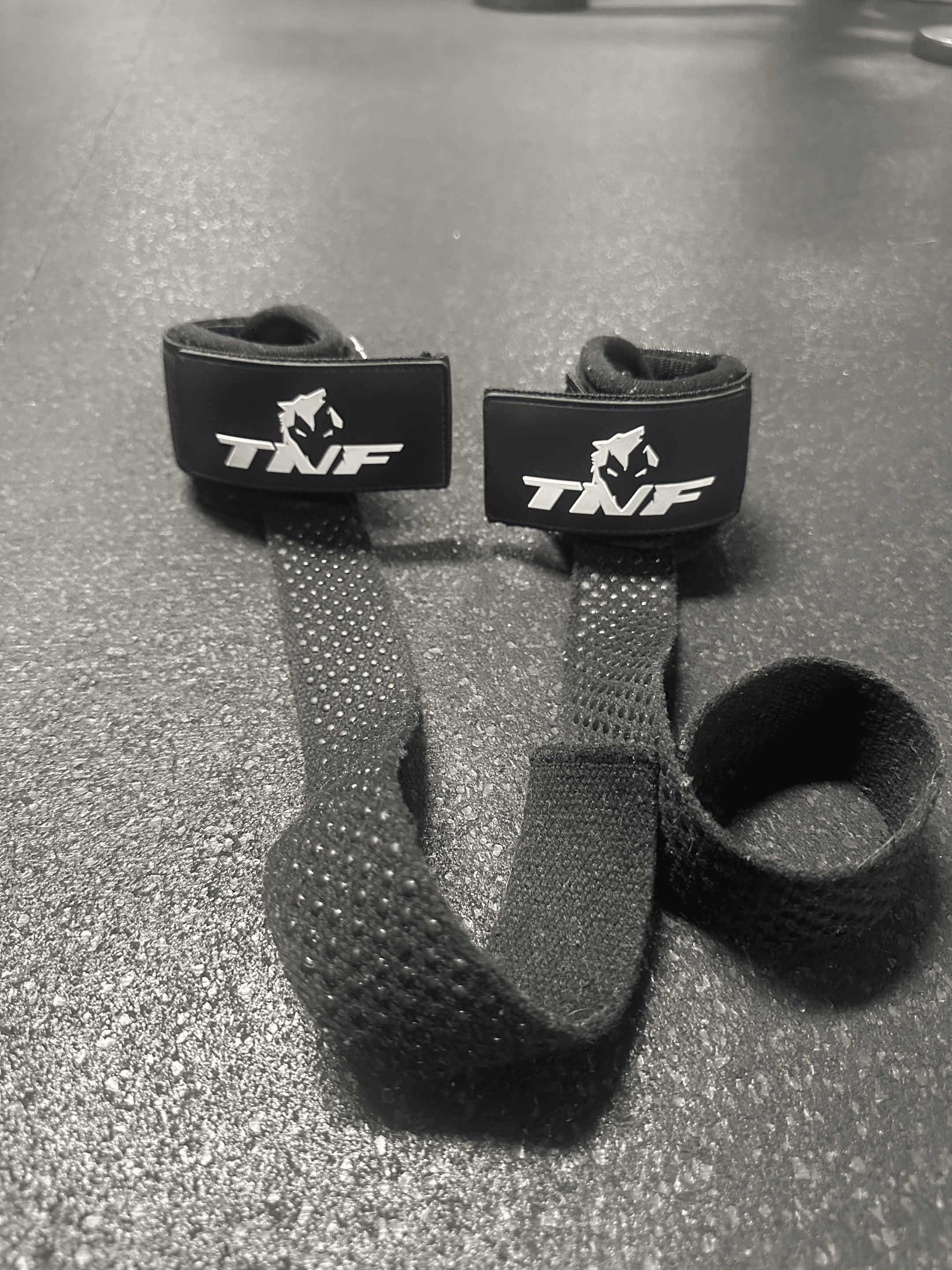
What Are the Ekkovision EKKO Cuffed D-Ring Lifting Straps?
At the most basic level, these are weight lifting straps with wrist support. You wear the padded cuff around your wrist and use the long strap to secure your hand to a bar, dumbbell, or machine handle. This is the familiar part: the strap helps transfer some of the load through the wrist connection so your grip is less likely to fail before your back, hamstrings, or traps have received the work you intended.
Ekkovision then adds the feature that makes the product special: a metal D-ring built into the cuff.
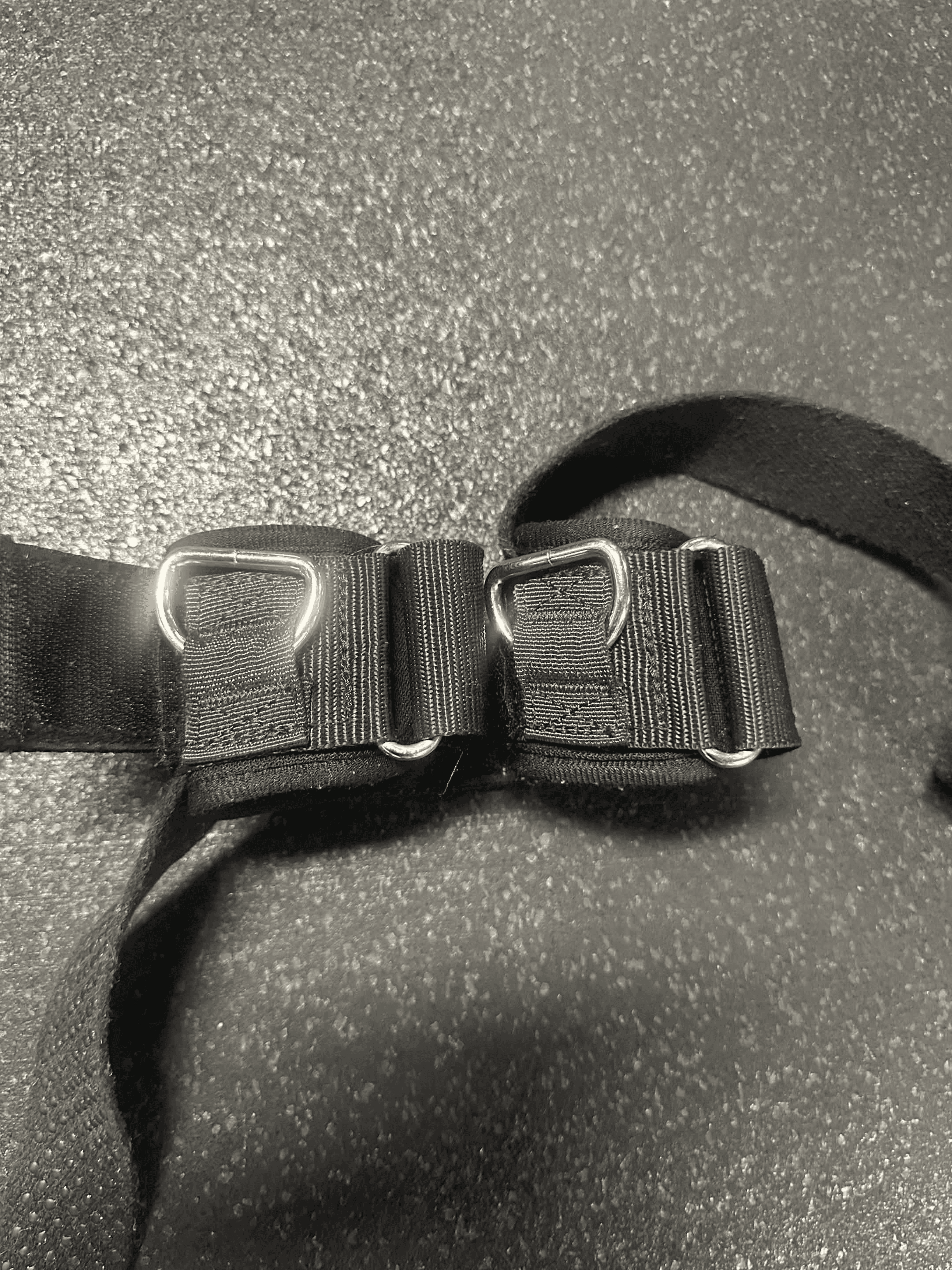
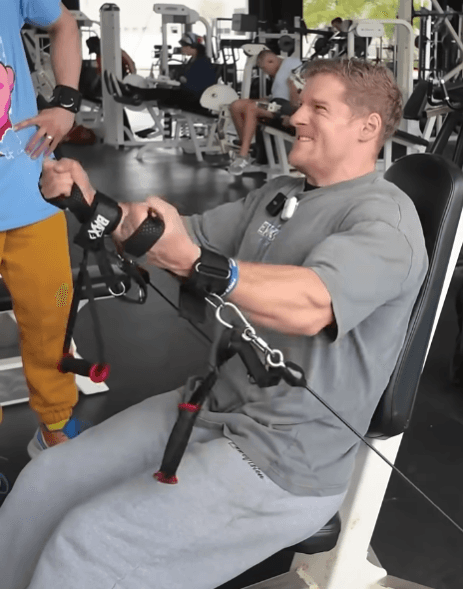
The D-ring can connect to the carabiner on a cable machine, turning each strap into a wrist cuff. Instead of holding a conventional handle, you can create a direct connection between the cable and your wrist. That makes these lifting straps for cable exercises, not merely lifting straps you carry over to the cable area and continue wrapping around handles.
Ekkovision's official product information says the D-ring variant connects to metal equipment and identifies biceps curls, shoulder raises, and triceps extensions among its possible applications. The company also lists 100% premium cotton, one pair per pack, and classic, cuffed, and cuffed-with-D-ring variants. Ekkovision's current product page confirms those construction and use details.
reinforced stitching, a metal D-ring, cushioned padding, an adjustable fit, and non-slip rubber padding to Those features align with the product's central idea: keep the cuff comfortable and secure while giving the user more than one way to connect to a load.
The Problem With Most Lifting Straps Is That Their Usefulness Ends Too Soon
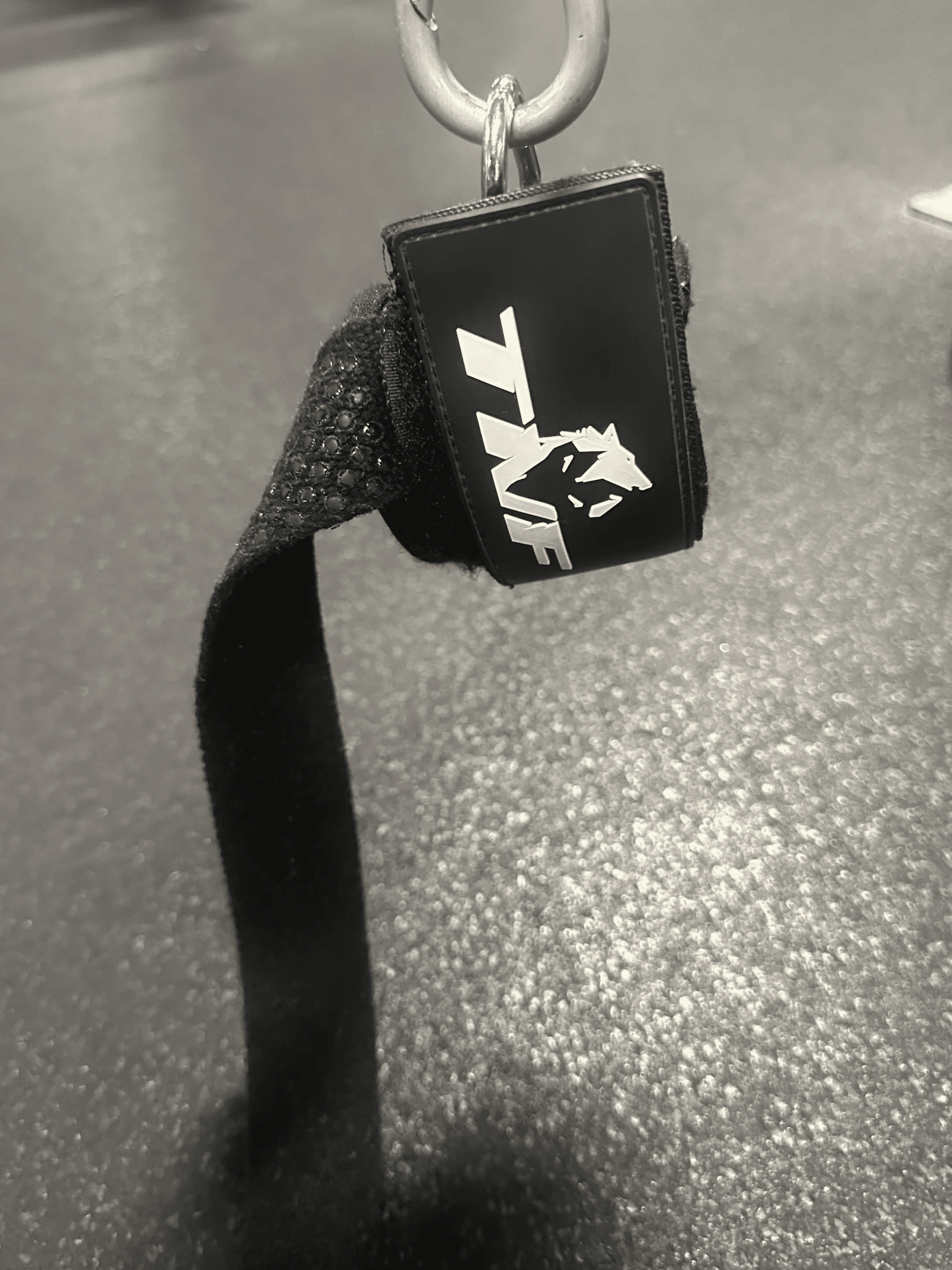
Traditional lifting straps are not bad products. In fact, a simple cotton strap can be one of the best-value accessories a lifter owns. The problem is that most straps solve only one narrow problem: they help you hold something heavy during a pulling exercise. Once that part of the session is over, they have nothing else to offer.
That limitation becomes more obvious when you look at how many people actually train. A modern hypertrophy session often moves between free weights, plate-loaded machines, selectorized equipment, and cable stations. You might begin with a Romanian deadlift, move to a chest-supported row, perform a pulldown, and finish with cable work for the shoulders or arms. Ordinary straps might help with the first three movements, but they contribute nothing once you want a cuffed connection for an isolation exercise.
The usual solution is to buy more equipment. You keep lifting straps for bars and handles, then add separate wrist cuffs for the cable stack. That setup works, but it means another purchase, another item in the gym bag, and another accessory to remember. It also creates an odd amount of duplication: both products sit around the wrist, but each has been designed for only one connection method.
The EKKO design combines those two jobs in a way that feels obvious after you have used it. The long cotton section remains available when you need to wrap around a bar. The cuff remains comfortable around the wrist. The D-ring waits out of the way until you need to attach a cable carabiner. Nothing needs to be assembled or swapped, and the additional function does not remove the traditional one.
That is what makes this Ekkovision lifting straps review so positive. The product does not attempt to improve straps by adding decoration or an exaggerated strength claim. It improves them by expanding when and where they are useful. A feature that lets an accessory serve you during more of the workout has far more practical value than a feature that looks impressive on a product page but changes nothing inside the gym.
There is also a psychological advantage to carrying equipment that earns its space. Gym bags quickly fill with belts, sleeves, wraps, cuffs, clips, bottles, and other small accessories. Each one may be useful, but clutter creates its own friction. You start leaving certain pieces at home, digging through the bag between sets, or realizing that the exact attachment you wanted is missing. A two-in-one product does not transform your life, but it makes the process cleaner. You know the same pair can help on the heavy pull and remain useful during the cable work later.
What a Full Workout Can Look Like With One Pair
The easiest way to understand the EKKO straps is to imagine them across an entire back-and-shoulder session rather than judging them during a single exercise.
You begin with warmup work and perform the early sets without straps. Your grip is fresh, the loads are manageable, and there is no reason to use assistance yet. As the working sets become heavier, your hands begin to approach their limit before the larger target muscles. You secure the cuffs, wrap the straps around the bar or machine handle, and continue the session without asking tired fingers to decide when every pulling set must stop.
On Romanian deadlifts, that can mean keeping your attention on hip position, control, and the stretch through the hamstrings instead of wondering whether the bar will roll out of your hands. On a chest-supported row, it can mean thinking about pulling through the elbow and controlling the return instead of squeezing the handle with everything you have. During pulldowns, it can help the forearms remain a supporting part of the movement rather than the first area to become exhausted.
At this point, a normal pair of straps has completed its job. With the EKKO pair, the workout simply changes modes.
You move to a cable station for single-arm lateral raises. Instead of finding a dedicated cuff or holding a small handle, you unroll the long strap, connect the machine's carabiner to the D-ring, and reduce the weight so you can learn the direct wrist setup. The hand can remain relaxed while you focus on moving the arm through a controlled path. When the shoulder work is complete, the same connection can be used for a high-to-low fly or a rear-delt variation.
Later, the cable is moved for triceps pushdowns. The attachment is already around your wrist, so the transition takes very little time. You can experiment with a single-arm path without a rope, rigid bar, or small handle determining exactly where the hand must sit. To finish the session, you can use a cuff-based curl or reverse-curl variation and then pack the same pair away.
This example is not a rule for how anyone must train, and it is not a claim that a wrist cuff is superior for every cable exercise. It demonstrates the product's range. One small accessory can remain relevant from the first demanding compound movement to the final isolation set. That is rare. Most gym accessories are highly specialized, and highly specialized tools are easy to leave at home when their use feels too narrow.
The full-session usefulness also improves cost per use. If a pair of basic straps appears only on one exercise every other week, even a low purchase price may not create much value. If the EKKO straps are used for several exercises across several weekly sessions, the slightly more involved design begins to justify itself quickly. The best value is not always the lowest number at checkout. It is the product that repeatedly improves training without becoming inconvenient to own.
Why I Call It “The Most Science-Based Lifting Strap”
The phrase “the most science-based lifting strap” is my description of the design, not a claim that one strap can make your training scientifically perfect. No accessory can replace good programming, appropriate technique, consistent effort, and sensible progression.
What the EKKO strap can do is remove several small limitations that often make an exercise less productive than it should be.
It Helps Stop Grip From Ending the Set
Imagine performing a hard set of Romanian deadlifts. Your hamstrings and glutes may still be capable of more work, but your fingers begin opening and your forearms are burning. If the goal of the set is training your posterior chain, losing the bar because of grip means the wrong tissue decided when the set ended.
Lifting straps do not make the target muscles stronger by magic. They simply make it less likely that grip becomes the first limiting factor. The same principle applies to heavy rows, shrugs, pulldowns, and other pulling exercises.
That is not an argument for avoiding grip training. It is an argument for matching the limiting factor to the purpose of the exercise. Train grip when grip is the target. Use assistance when a stronger connection helps another muscle receive the intended stimulus.
The D-Ring Removes the Need to Crush a Cable Handle
The cable function is even more interesting. On many isolation exercises, gripping a handle is necessary only because the cable needs somewhere to connect. Your fingers are not the muscle you are trying to train during a lateral raise or triceps pushdown, yet you still have to maintain the handle connection.
Clipping the cable to a wrist-mounted D-ring changes that relationship. You can focus more on moving the upper arm, controlling the eccentric, maintaining alignment, and performing the intended joint action. It does not automatically make every exercise better, but it can make several movements feel more direct and less distracted by hand position.
It Makes Setups More Repeatable
A useful training accessory should reduce friction rather than introduce more of it. Once you know how you want the cuff positioned and which cable height suits an exercise, the D-ring provides a simple, repeatable connection.
That matters because good hypertrophy training benefits from consistency. If the setup changes dramatically every session, it becomes harder to judge whether performance is improving. A stable wrist connection can make it easier to repeat the same movement path, focus on controlled repetitions, and progress the exercise over time.
It Gives One Accessory More Than One Job
Science-based training is not about owning the greatest number of attachments. It is about choosing tools that make exercises easier to execute, easier to progress, and better aligned with the goal.
The EKKO strap earns its place because it is useful during heavy pulling work and precise cable isolation work. That is an unusually wide range for something small enough to live permanently in a gym bag.
What Actually Changes When the Cable Attaches at the Wrist?
The D-ring is easy to describe, but the difference it creates is easier to understand when you think about the role of the hand in a cable exercise.
With a standard handle, the cable pulls on something held by the fingers. The hand and wrist become part of the connection between the machine and the arm. Sometimes that is useful. A handle can provide control, give you something familiar to brace around, and let you adjust the angle by changing your grip. In other exercises, however, holding the handle is little more than a requirement created by the attachment itself.
A lateral raise is a good example. The goal is usually to train the shoulder through abduction of the arm. The fingers do not need to become a major limiting factor, yet a traditional cable setup still requires the hand to hold an attachment. Moving the connection to the wrist does not change which shoulder action you are performing, but it can remove the feeling that the hand must lead the exercise. Many lifters find it easier to think about the elbow and upper arm when the cable is no longer hanging from a tightly squeezed handle.
The same idea can apply to flyes. A conventional handle is perfectly usable, but a wrist connection may help someone focus on bringing the arms through the intended arc while keeping the hands relaxed. It can also reduce the urge to turn the movement into a press by aggressively gripping and driving the handle. The cuff does not prevent poor technique by itself, yet it changes the feedback enough that some people find the target movement easier to understand.
For triceps work, the direct connection can create more freedom around the hand. A straight bar, rope, and individual handle each influence the wrist and hand position in their own way. A cuff lets the lifter explore the elbow path with less concern about what the attachment is doing in the fingers. That can be especially useful for single-arm work where the goal is a smooth, comfortable path rather than moving the largest possible stack.
There is an important trade-off. Moving the load to the wrist changes the way the exercise feels, and the weight you use with a handle should not automatically be copied to the cuff. The lever, attachment point, stability demand, and familiarity can all be different. That is why the first set should be treated as a learning set. Use a light load, find the position in which the cuff sits flat, and make sure the cable is pulling in a direction that feels secure.
This is another reason I describe the product as science-based in spirit. Good training involves adjusting an exercise to the goal and to the person performing it. There is no prize for using the same handle on every cable movement. There is also no prize for using the cuff merely because it looks more advanced. The EKKO straps give you both options, allowing you to choose the connection that creates the most stable, repeatable, and comfortable execution for that specific exercise.
The product therefore adds experimentation without forcing complexity. You can compare a set with a regular handle and a set with the D-ring, then keep the version that feels better and progresses more reliably. That is a far more useful approach than assuming one attachment must be universally correct.
The D-Ring Is Ridiculously Good for the Gym
This deserves its own section because the D-ring is not a minor bonus. It is the reason I recommend these straps so strongly.
With a normal pair of lifting straps, the product's job is mostly over once you finish deadlifts, rows, pulldowns, or shrugs. With the Ekkovision cuffed straps, you can walk to the cable stack, attach the carabiner to the D-ring, and immediately use the same accessory for isolation exercises.
That is ridiculously good for the gym. It makes the straps feel less like a single-purpose aid and more like a compact training system.
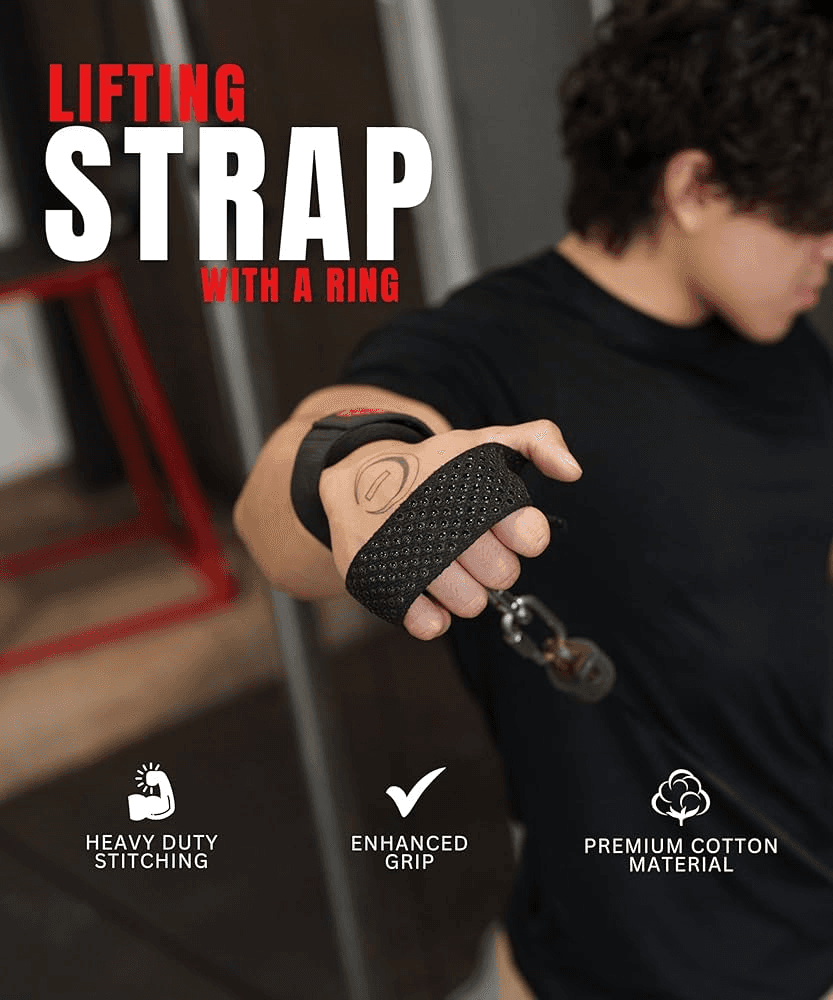
Triceps Pushdowns
For single-arm pushdowns, the cuff lets the cable pull from the wrist instead of forcing you to hold a small handle. That can make it easier to think about elbow extension, control the bottom position, and avoid turning the set into a grip exercise.
The setup also gives you freedom to experiment with your arm path without being locked into the exact shape of a rigid handle. Start lighter than usual, position the cuff securely, and find a path that feels stable at the elbow.
High-to-Low Cable Flyes
High-to-low flyes are another excellent use. A wrist-based connection can reduce the temptation to overthink the hands and make the movement feel more focused on bringing the upper arms inward and down. This is most optimal with a bench as it makes it more stable.
This does not mean everyone must stop using handles. Some lifters will prefer the control of a conventional grip. The advantage is that the EKKO straps give you another setup to try without purchasing a separate pair of cable cuffs.
Reverse Curls
The straps can also support a wrist-cuff version of cable reverse curls. Because the cable connects closer to the wrist, this is not identical to holding an EZ bar or straight bar with a pronated grip. It is a variation with a different feel and resistance connection.
That difference can be exactly why someone enjoys it. It provides another way to train elbow flexion and the forearm-dominant side of curling work without being limited by how securely a small handle can be held.
Lateral Raises
This may be the exercise that best explains the entire product. Traditional cable lateral raises often require a small handle or a separate cuff. The EKKO D-ring gives you the cuff option immediately.
When the cable is connected at the wrist, you can concentrate on leading with the arm and controlling the shoulder movement rather than squeezing a handle. For anyone specifically searching for lifting straps for lateral raises, this design is far more relevant than a standard loop strap.
More Exercises to Explore
Depending on your gym's equipment and your preferred movement setup, the D-ring can also be useful for:
Single-arm cable curls
Cross-body cable curls
Cable Y-raises
Rear-delt cable flyes
Overhead cable triceps extensions
Cable front raises
Low-to-high flyes
Wrist-cuff pulldown or pullover variations
Cable movements used during warmups or rehabilitation-style light work, when appropriate for the individual
The point is not that every exercise becomes superior when attached at the wrist. The point is that the D-ring gives you options. You can use a regular handle when gripping helps the movement and switch to the cuff when the handle becomes an unnecessary distraction.
Always inspect the cuff, stitching, D-ring, and cable carabiner before loading the exercise. Attach everything while the cable is unloaded, begin light, and confirm that the cuff is secure and comfortable before progressing. These are training accessories, not fall protection or safety equipment.
How Good Are They as Regular Lifting Straps?
The clever D-ring would not matter if the product failed at its original job. Fortunately, the EKKO straps still work as proper lifting straps.
The long section wraps around the bar or handle while the cuff sits around the wrist. Once the wrap is tightened, you no longer need your fingers to provide the entire connection. Your hands still guide and control the implement, but the strap shares the demand.
I personally like having them available for exercises such as:
Romanian deadlifts
Barbell and machine rows
Dumbbell rows
Shrugs
Kelso shrugs
Pulldowns
Heavy pulling sets where the target muscle should outlast the forearms
They should not be used automatically on every warmup and every set. There is value in allowing your hands and forearms to work naturally. My preferred approach is simple: begin without straps when appropriate, then use them when grip would otherwise reduce the quality or duration of the target-muscle work.
This is where the cuffed design feels especially useful. It offers support around the wrist instead of feeling like a thin strip has been placed there as an afterthought. The construction feels substantial enough to inspire confidence without turning the accessory into something enormous.
Comfort, Fit, and Build Quality
Comfort matters more than it sounds. A lifting strap can be strong and still become frustrating if it digs into the wrist, twists constantly, or feels unpleasant as the set becomes difficult.
In my experience, the cuffed EKKO design is comfortable and secure enough that the accessory does not become the main thing I notice during training. That is exactly what I want. The strap should improve the connection and then disappear into the set.
The product combines several sensible construction choices:
A thick cuff that distributes pressure around the wrist
Cotton strap material designed for repeated wrapping
Reinforced stitching around load-bearing areas
A metal D-ring for cable attachment
An adjustable, unisex fit
Non-slip padding intended to improve security
I would not claim that any fabric gym accessory is indestructible. Stitching, cotton, padding, and metal hardware all wear with enough use. The better question is whether the product feels suited to the job and whether its design avoids obvious weak points. The EKKO straps make a convincing case on both counts.
My Ekkovision TNF Strap
I own the TNF version of these Ekkovision straps, and it is the version I would personally choose again.
Functionally, the appeal is the same cuffed D-ring design. The difference is the TNF branding printed on the strap. Ekkovision currently lists TNF among the available logo choices for its lifting straps, alongside EKKO and several other designs.
The TNF version is connected to TNF on YouTube, also known as T Nutrition and Fitness. His name is Joel, and his channel focuses on training, muscle building, fat loss, exercise effort, and subjects such as training to failure. He is a genuinely good gym YouTuber to follow if you enjoy training content that tries to explain not only what to do, but why an exercise or method may be useful.
There is a lot of fitness content online that looks impressive without teaching much. TNF's channel is valuable because the focus is much closer to serious gym training: exercise execution, muscular development, effort, and making better decisions inside a workout. Even when you do not agree with every conclusion from any fitness creator, that kind of specific, practical discussion is far more useful than generic motivation clips.
You can check him out here: TNF`s youtube
That makes the logo feel relevant rather than random. If you already watch TNF or like his training approach, the Ekkovision EKKO lifting straps with TNF branding are the pair I recommend. You receive the useful D-ring design while also supporting a version connected to a creator whose gym content is worth watching.
If the logo does not matter to you, choose the standard Ekkovision EKKO Cuffed D-Ring Lifting Straps. The important buying decision is getting the cuffed version with the D-ring rather than accidentally choosing the classic strap when you want the cable functionality.
Setup: How to Use the Two Functions
Using Them as Traditional Lifting Straps
Secure the cuff comfortably around the wrist.
Place your hand on the bar or handle.
Wrap the long strap around the implement in the direction that tightens as you close your hand.
Rotate the bar or adjust the wrap until the connection feels snug.
Test the setup with light tension before beginning the working set.
The wrap should feel secure without cutting into the wrist or trapping the hand in a position that feels unsafe. Practice with light weight until wrapping becomes automatic.
Using the Cuffed D-Ring on a Cable Machine
Secure the cuff around the wrist.
Clip the cable carabiner fully through the metal D-ring.
Move into the exercise's starting position while controlling the cable. (mby with a bench)
Add load and stark working out
Do not rush this because the attachment looks simple. A direct wrist connection changes how an exercise feels. Give yourself time to learn the setup and resistance path before treating it like a familiar handle movement.
Cleaning and Long-Term Care
Gym straps absorb sweat, touch shared equipment, and spend time inside warm gym bags. Cleaning them is not optional if you want them to remain pleasant to use.
Ekkovision recommends handwashing the straps with mild soap and water, rinsing them thoroughly, and allowing them to air dry. The company also warns that exposure to soap—even with gentle washing—can cause tarnishing on the metal rings. Its general guidance suggests washing every one to two weeks, adjusted for workout frequency and use.
That means the easiest ownership routine is:
Remove the straps from the gym bag after training so they can dry.
Handwash rather than throwing them into a normal machine cycle.
Use mild soap and rinse carefully.
Air dry completely before storing them.
Inspect the stitching, cuff, strap material, and D-ring regularly.
Avoid leaving them wet beside other metal accessories.
This is the main hidden ownership requirement. The D-ring creates much of the product's value, but metal hardware also needs slightly more care than a plain cotton loop.
Who Should Buy the Ekkovision D-Ring Lifting Straps?
The clearest answer is that these straps are made for someone whose training is more varied than a few barbell lifts. If you regularly combine heavy pulling movements with cable-based hypertrophy work, you are the exact type of person who will understand the design almost immediately. You do not have to invent situations in which the D-ring might become useful; those situations already appear throughout your normal week.
A hypertrophy-focused lifter is probably the strongest match. During muscle-building training, it matters which part of the body becomes the limiting factor. If you are performing a row for your back and your fingers fail first, the set may finish for a reason unrelated to the muscle you intended to train. If you are performing lateral raises and spend more attention squeezing the attachment than controlling the arm, the connection may be adding distraction without adding meaningful value. The EKKO straps address both problems from opposite directions: the long strap supports grip during heavy pulls, while the D-ring can remove grip from cable isolation work.
That makes the product useful for people who care about exercise execution rather than merely completing the movement. These lifters tend to notice small sources of instability. They care about whether the same setup can be repeated next week, whether a handle forces an uncomfortable wrist angle, and whether forearm fatigue is masking the performance of a larger target muscle. The cuff does not make technique automatic, but it gives that type of lifter another way to refine the setup.
The straps also make sense for anyone whose back and posterior-chain strength has progressed beyond unaided grip. This is a common point in training. Large muscles such as the back, glutes, and hamstrings can tolerate substantial loading, while the hands must maintain a relatively small contact point with the bar. Eventually, a lifter may realize that Romanian deadlifts, shrugs, or rows are becoming tests of how long the fingers remain closed. At that point, straps are not cheating the target movement. They are a way of ensuring that the target muscle, rather than an incidental limitation, receives the planned work.
Someone who performs frequent cable training will get even more value. Pushdowns, lateral raises, flyes, rear-delt work, and curl variations are not rare novelty exercises; they are normal parts of many well-designed gym programs. If you use a cable stack in almost every session, buying an ordinary strap that cannot connect directly to that equipment feels like leaving half the design opportunity unused. The D-ring is what allows the EKKO pair to remain relevant after the deadlifts and rows are finished.
They are particularly attractive for lifters who already own separate wrist cuffs but dislike carrying extra equipment. A gym bag does not need to become an attachment warehouse. Combining the strap and cuff functions reduces the number of pieces you need to remember, unpack, clean, and repack. That convenience sounds minor until you are halfway through a busy session and discover that the attachment you wanted is at home. With the EKKO pair, the cable function is already attached to the straps you brought for the pulling work.
Beginners can also use them, although they should learn why and when assistance is helpful. A new lifter does not need straps for every set, and developing a natural grip remains valuable. However, beginners often benefit from equipment that is versatile and easy to keep rather than purchasing several highly specific accessories. The EKKO design can remain useful as training becomes more advanced: first as a simple pair of straps, later as a cable cuff, and eventually as a tool for selecting the limiting factor more deliberately.
Experienced lifters may appreciate the product for the opposite reason. After years of training, many people have already collected ordinary straps, cuffs, handles, and improvised solutions. They know which small inconveniences repeat every week. For them, the appeal is not novelty. It is consolidation. The design takes two familiar tools and combines them without removing what made either useful.
The TNF version has a more specific audience, but it is worth mentioning separately. If you follow Joel's TNF YouTube channel and enjoy his approach to training, the branding gives the product a personal connection. You are not paying for a logo on an otherwise pointless accessory; you are choosing a version of a genuinely useful product associated with a creator whose content you already value. That is why I chose the TNF version and why it remains the version I personally recommend to viewers of his channel.
Ultimately, the ideal buyer is someone who wants gym equipment to justify the space it occupies. These straps are not purchased for display. They earn their place by assisting heavy pulls, supporting cable isolation work, reducing the number of separate accessories in the bag, and giving the lifter more control over how an exercise connects to the body. If those advantages match the way you train, the EKKO D-ring version is a much stronger purchase than a basic one-purpose strap.
Who Might Prefer Something Else?
Despite how positive this Ekkovision lifting straps review is, the product is not essential for every person.
You may prefer simpler straps if you train mainly with barbells and almost never use a cable machine. A basic cotton pair can handle the grip-assistance job with less material around the wrist, and the EKKO D-ring would spend most of its life unused. Someone who wants the thinnest possible strap and does not care about wrist-cuff exercises is paying for versatility they will not use.
You may also skip them if your primary goal is maximizing unaided grip strength during every pulling movement. Straps reduce grip demand by design, so they should not replace dedicated grip work when grip is the skill you want to improve. A balanced approach can include both, but the accessory only makes sense if you are willing to distinguish between sets intended to train grip and sets intended to train another muscle.
Finally, some people simply prefer conventional handles during cable exercises. A handle gives the hand an active role, can feel more stable during certain movements, and may be easier to set up when the gym is busy. The wrist connection feels different. That difference is the benefit for many users, but it is still a preference rather than a universal rule. The advantage of the EKKO design is that owning the D-ring does not force you to use it; the traditional strap remains available, and a normal cable handle remains an option whenever it feels better.
Are Ekkovision Lifting Straps Worth It?
Yes—especially the cuffed D-ring version.
If these were only normal straps with attractive branding, the recommendation would be less exciting. Plenty of products can wrap around a bar and assist your grip. What makes the EKKO design worth buying is that it continues being useful after the heavy pulling work is finished.
The value comes from consolidation. Instead of buying and carrying standard lifting straps plus dedicated cable cuffs, you get both functions in one pair. You save gym-bag space, reduce setup clutter, and gain more exercise options without carrying a collection of handles.
From a cost-per-use perspective, that matters. A cheap accessory used only for occasional deadlifts may be less valuable over time than a slightly more expensive one used during rows, Romanian deadlifts, pulldowns, pushdowns, flyes, curls, and lateral raises. The more often the D-ring fits your training, the stronger the value becomes.
The biggest reason for potential buyer's regret is ordering the wrong version. Ekkovision sells classic and cuffed options in addition to the D-ring configuration. If the cable functionality is why you are interested, make sure the selected product specifically includes the cuffed D-ring.
EKKO Straps vs Basic Straps, Grips, and Separate Cable Cuffs
The EKKO straps make the most sense when compared with the combination of products they can replace, not with one narrow competitor.
A basic loop strap is the simplest alternative. It is light, inexpensive, and effective for securing the hand to a bar. If deadlifts and rows are the only reason you want straps, that simple design may be enough. What it cannot do is become a direct cable attachment. The moment you want wrist-cuff lateral raises or pushdowns, you need a second product.
Lifting grips are another alternative. These often use a rubberized or shaped section that folds around the bar more quickly than a long cotton strap. Some lifters love the speed and the feeling of a broader contact surface. Others prefer the more adjustable wrap of a conventional strap. Grips can be excellent for pulling work, but most still do not provide the EKKO design's built-in metal connection for cable exercises.
Dedicated cable cuffs solve the other half of the problem. A good cuff can be comfortable, secure, and excellent for lateral raises, flyes, curls, or triceps work. If cable training is your only priority, a specialized cuff may provide exactly the experience you want. The limitation is that it cannot normally wrap around a bar for Romanian deadlifts or rows. You then return to carrying two products.
The EKKO design sits in the middle. It may not be quite as minimal as the thinnest basic strap, and a highly specialized cuff may offer a different shape or closure that one individual prefers. Its advantage is coverage. It gives one lifter a strong solution for both categories without asking the gym bag to hold separate tools for every movement.
That is why the product's value grows with variety. A powerlifter who wants straps only for occasional training pulls may be perfectly satisfied with a basic pair. A hypertrophy-focused lifter who uses rows, hinges, pulldowns, raises, flyes, and arm work throughout the week is much more likely to appreciate the D-ring. The broader the training, the more often the design earns its place.
There is also less risk of buying an accessory that becomes obsolete as your program changes. If you stop deadlifting for a training phase, the straps can remain useful on cable movements. If you reduce isolation work and focus on heavier pulling, the traditional wrap function remains. That adaptability is more meaningful than a small difference in purchase price because it increases the chance that the product continues being used over the long term.
Final Verdict: A Small Gym Accessory That Does Much More Than Expected
The best products are not always the ones with the most features. They are the ones that remove friction from something you already do several times every week.
The Ekkovision EKKO Weight Lifting Straps With Cuffed D Ring solve the familiar problem of grip limiting a pulling exercise. Then they go further. The D-ring converts the cuff into a cable attachment for triceps pushdowns, high-to-low flyes, reverse curl variations, lateral raises, curls, rear-delt work, and many other movements.
That is why I personally recommend them so strongly. I own them, I use them, and I think the design is genuinely smarter than a traditional one-purpose strap. Calling them the most science-based lifting strap is ultimately an opinion, but it is an opinion based on a clear design advantage: they help you manage the limiting factor, improve exercise flexibility, and create a more direct setup for targeted cable work.
The trade-offs are minor. They are bulkier than the simplest straps, they need proper handwashing and air drying, and the D-ring offers little value to someone who avoids cable machines. For the type of lifter who performs both heavy pulls and controlled hypertrophy work, those drawbacks are easy to accept.
If you want the clean EKKO version, choose the standard cuffed D-ring straps. If you follow Joel and want the version I personally own, choose the Ekkovision TNF D-ring lifting straps and visit TNF's YouTube channel for genuinely useful gym content.
My overall rating is 10/10, im Amazen with the product. The strap has not even changed or gotten lose after over a year. Ekkovision really hit the jackpot with this.
Worth the cart? Absolutely. These are not merely lifting straps—they are one of the most useful compact accessories you can add to a serious gym bag.
Popular Posts
Gaming & Technology
USB vs PCIe WiFi Adapter: Which Is Better for Gaming?
Books
25 Books That Could Change Your Life: Money, Habits, and Mindset
Tech Reviews
ZimaCube 2 Review: The Home Server That Finally Makes Cloud Subscriptions Feel Silly
Travel & Hosting
24 Holiday Hosting Essentials for a Vacation Home
Keep reading
Related articles

