Online Business
·
1 products compared
Last updated
9.8
⭐ Best Value Pick
namecheap
Namecheap Review
Affiliate disclosure: WorthTheCart may earn a commission from qualifying purchases. This does not affect our editorial opinions, rankings, or recommendations.
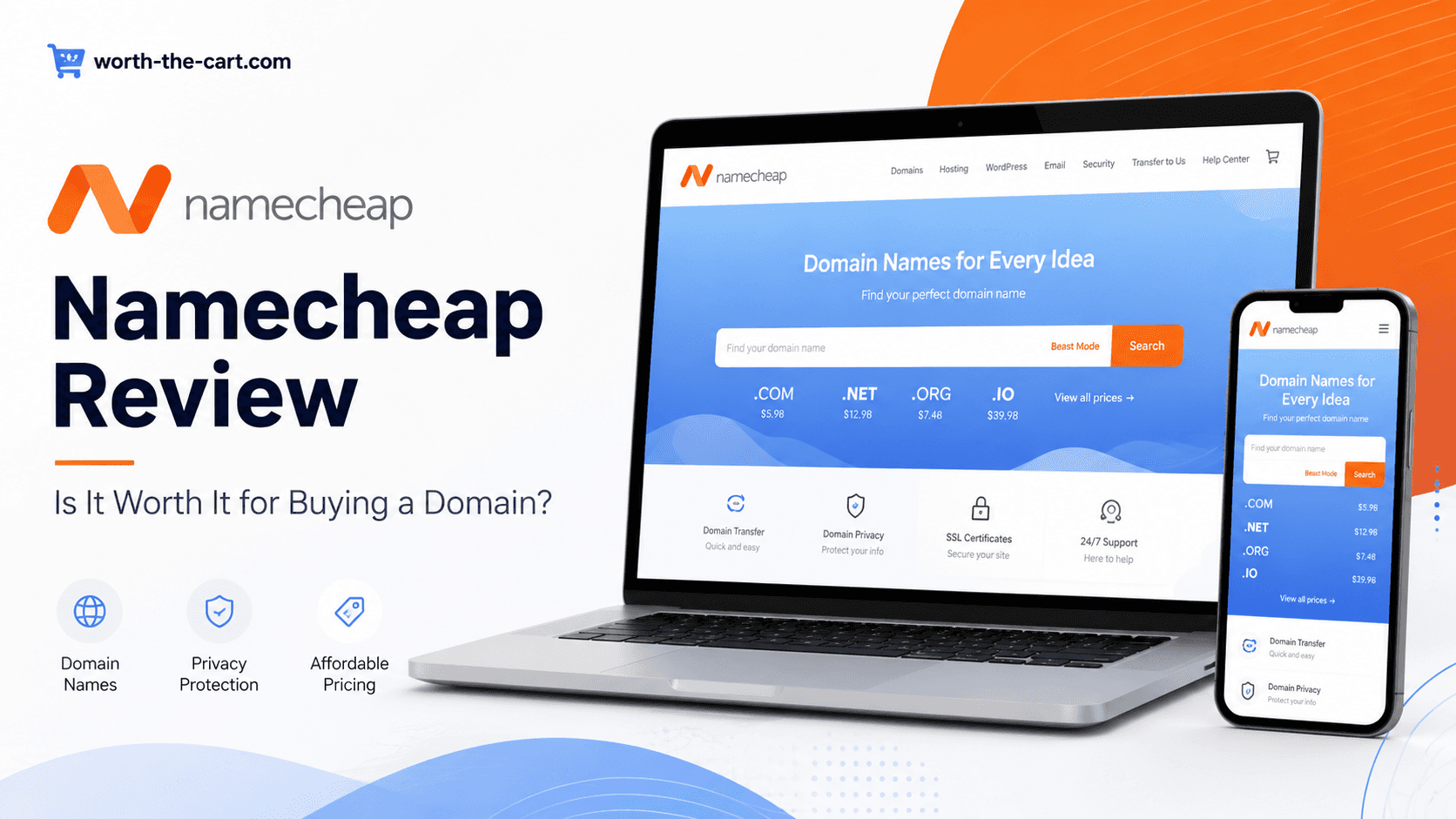
Namecheap is one of the easiest ways to buy a domain name if you are starting a website, blog, online store, portfolio, side project, or small business.
A domain name is one of the first real decisions you make when building anything online.
Before the logo, before the design, before the content, and before the product, you need a name people can actually type, remember, and trust.
That is where Namecheap makes a lot of sense.
Namecheap is best known as a domain registrar, but it is also more than just a place to buy a domain.
You can search for available domain names, register a domain, manage DNS, connect the domain to a website builder or hosting provider, set up domain privacy, explore hosting, add business email, and build a more professional online identity from one account.
That combination makes Namecheap especially useful for beginners.
A lot of domain websites feel confusing if you have never bought a domain before.
You see DNS records, nameservers, WHOIS privacy, SSL certificates, hosting, redirects, renewals, transfers, and email forwarding before you even understand what the domain does.
Namecheap does a good job of making the process feel more approachable.
It is simple enough for someone buying their first domain, but still useful enough for bloggers, affiliate marketers, creators, freelancers, small businesses, and people managing multiple websites.
That is why Namecheap earns a 9.8/10 WorthTheCart rating.
It is not just a cheap domain site.
It is one of the best places to start building something online.
What Is Namecheap?
Namecheap is a domain registrar and online business platform that helps people buy, register, and manage domain names.
A domain name is the address people type to visit your website.
For example, a domain can be your blog name, business name, store name, creator brand, portfolio name, or project name.
If you want to build a website, you usually need a domain first.
Namecheap lets you search for that domain, see whether it is available, compare different extensions like .com, .net, .co, .org, .io, .shop, or .website, and register the one that fits your project.
Namecheap also offers related services such as web hosting, business email, SSL certificates, DNS tools, and domain privacy.
Namecheap’s official domain privacy page says eligible new domain registrations and transfers include free lifetime domain privacy, which helps hide personal contact details from the public WHOIS database.
That privacy feature is one of the biggest reasons Namecheap feels like a strong value pick.
A domain is not just a technical detail.
It is part of your brand.
If you are starting a blog, a product review site, a Shopify store, a portfolio, a personal website, a newsletter, or a business, your domain is often the first thing people notice.
Namecheap makes that first step easier.
Why Namecheap Is Good for Beginners
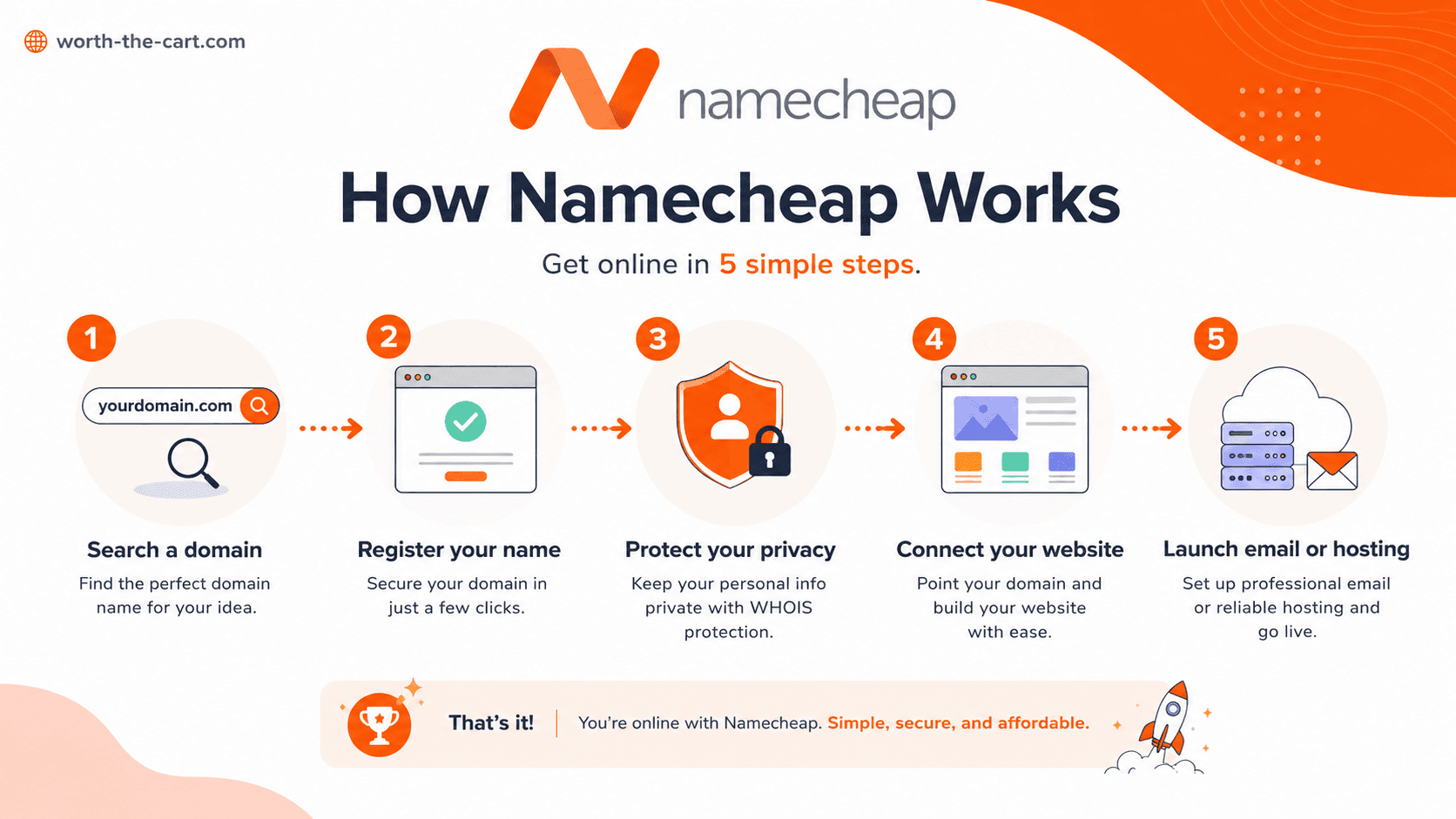
Namecheap is good for beginners because it keeps domain buying simple.
A beginner does not want to feel lost inside a technical dashboard.
A beginner wants to know three things.
Is my domain available?
How much does it cost?
How do I connect it to my website?
Namecheap makes those steps more approachable than many domain platforms.
The domain search is direct.
The checkout is understandable.
The domain dashboard is not overly complicated.
And once the domain is inside your account, Namecheap gives you the tools to manage it without feeling like you need to be a developer.
A recent TechRadar domain registrar review also praised Namecheap’s clear dashboard, domain search process, and beginner-friendly management tools.
That matters because buying a domain is often the first technical step for a new website owner.
If that first step feels confusing, people quit before they even build the site.
Namecheap reduces that friction.
For bloggers, this is important.
For affiliate website owners, this is important.
For small businesses, this is important.
For creators and students, this is important.
Your domain should not be the hardest part of starting.
Best Features of Namecheap
The best thing about Namecheap is that it combines domain registration with the tools people usually need next.
You can start with just a domain.
Then, if your project grows, you can add services around it.
That makes Namecheap more flexible than a basic domain-only platform.
The main features worth knowing are domain search, domain registration, domain privacy, DNS management, domain transfers, hosting options, business email, SSL certificates, and optional security tools.
Namecheap’s domain price page lists many domain extensions and shows that eligible domains include free lifetime Domain Privacy, though pricing changes by extension and renewal type.
That is important because first-year domain prices and renewal prices are not always the same.
With any domain registrar, you should always check the renewal price before buying.
But overall, Namecheap gives you a strong mix of price, privacy, usability, and features.
Domain Search
Namecheap makes domain search simple.
You type in your idea, check availability, and compare different domain extensions.
This is helpful because the exact .com domain you want may already be taken.
Instead of stopping there, you can compare alternatives and see whether another extension makes sense.
For a beginner, this is valuable.
A good domain search tool helps you move from “I have an idea” to “I can actually buy this name.”
Free Domain Privacy
Domain privacy is one of the strongest reasons to use Namecheap.
When you register a domain, public domain records can expose contact information unless privacy protection is used.
Namecheap explains that domain privacy replaces your real contact information with privacy-protected information and helps reduce unwanted exposure and spam.
That is a big deal for personal brands, bloggers, small business owners, students, and creators who do not want their private information easily visible.
Not every domain extension supports privacy, because some registries have restrictions.
But for eligible domains, this is a major value feature.
Easy Domain Management
A domain is not something you buy once and ignore forever.
You may need to point it to a website builder.
You may need to change nameservers.
You may need to renew it.
You may need to turn on auto-renew.
You may need to redirect it.
You may need to connect email.
You may need to manage DNS records.
Namecheap gives you a dashboard where these actions are easier to understand.
That is one of the reasons it works well for beginners.
You do not need to be an expert to manage the basics.
Hosting and Email Options
Although Namecheap is best known for domains, it also offers hosting and private email products.
Namecheap’s official Private Email page describes its business email hosting as secure and ad-free for professional email on your domain.
This matters because a custom business email looks more professional than using a basic Gmail address for a brand.
For example, an email like hello@yourdomain.com usually feels more trustworthy than a random personal email.
That is especially useful for small businesses, blogs, guest post pages, affiliate sites, agencies, and online stores.
Who Is Namecheap Best For?
Namecheap is best for people who want a simple, affordable, and beginner-friendly way to buy a domain name.
It is especially good for first-time website owners.
It is also good for bloggers.
It is good for affiliate marketers.
It is good for people starting a Shopify store.
It is good for creators building a personal brand.
It is good for freelancers who need a portfolio domain.
It is good for small businesses that want a professional web address.
It is good for people who want a domain now and may add hosting or email later.
The biggest reason Namecheap works for so many people is that domain registration is a universal need.
Almost every serious online project needs a domain.
Whether you are building a blog, a store, a newsletter, a product comparison site, a software project, a portfolio, or a brand, the domain is your starting point.
Namecheap makes that starting point easy.
Namecheap for Bloggers and Affiliate Websites
Namecheap is a strong choice for bloggers because it gives you a clean way to secure a brandable domain name.
A blog without a real domain can feel unfinished.
A blog with a clear domain feels more serious.
If you are building an affiliate website, product review blog, niche site, or content brand, the domain matters even more.
People judge websites quickly.
A clean domain can make your site feel more trustworthy before the reader even sees the article.
That is why Namecheap works so well for new bloggers.
It helps you secure the name and move forward.
You can buy the domain first, then connect it to WordPress, Framer, Shopify, Webflow, Squarespace, or another website platform.
That flexibility is important.
You are not locked into one website builder just because you bought the domain.
Namecheap for Small Businesses
Namecheap is also useful for small businesses that need a professional domain.
A small business domain should be easy to remember, easy to spell, and connected to the brand name.
Once you have that domain, you can use it for your website, email address, landing pages, marketing materials, QR codes, business cards, and social profiles.
This is where Namecheap becomes more than just a domain site.
It becomes part of the business setup.
A business that uses a custom domain and custom email often feels more professional than one that only uses a social media page.
That does not mean every small business needs a complicated website on day one.
But owning the domain early is smart.
It protects the name and gives you room to grow later.
Namecheap for Online Stores
Namecheap is also a good fit for people starting online stores.
If you are building a Shopify store, WooCommerce store, dropshipping store, print-on-demand store, digital product store, or niche ecommerce brand, your domain is part of your trust.
A store with a clean domain feels more serious.
A store with a random temporary domain feels unfinished.
That is why buying a domain through Namecheap can be one of the first smart steps before launching a store.
You can search different domain names, compare extensions, and choose something that fits your product category.
A good store domain should be short, clear, and easy to remember.
It should also avoid looking spammy.
Namecheap helps you test those ideas quickly.
Reasons to Buy Namecheap
The first reason to choose Namecheap is simplicity.
It makes buying a domain feel easy.
The second reason is value.
Namecheap is known for competitive domain pricing, and the free lifetime domain privacy for eligible domains adds more value.
The third reason is privacy.
Domain privacy is not just a bonus.
It is something many website owners should care about.
The fourth reason is flexibility.
You can use Namecheap with many different website platforms.
The fifth reason is that it is beginner-friendly without being too basic.
A total beginner can use it.
But someone with multiple sites can still find it useful.
That balance is why Namecheap scores so highly.
Start with the domain first.
Then add what you actually need later.
Namecheap is best when you use it intentionally.
WorthTheCart Rating

Namecheap — 9.8/10
Value: 9.8/10
Namecheap offers strong value because it combines domain registration, privacy, domain management, and optional business tools in one beginner-friendly platform.
Use: 9.9/10
Namecheap is extremely useful because almost every real online project needs a domain name.
Build: 9.7/10
The platform feels clean, mature, and practical, especially for users who want to manage domains without unnecessary confusion.
Regret: Very low
Regret is low because a domain is a foundational purchase, and Namecheap makes it easy to get started without overcomplicating the process.
Final Verdict: Is Namecheap Worth It?
Yes, Namecheap is worth it if you need a domain name for a website, blog, business, online store, portfolio, or side project.
It is one of the best domain registrars for beginners because it makes domain search, registration, privacy, and management easier to understand.
It is also a strong choice for more serious website owners because it gives you room to grow with email, hosting, SSL, DNS tools, and extra services when needed.
The biggest thing to remember is simple.
Do not buy a domain only because the first-year price looks low.
Check the renewal price.
Choose a domain that actually fits your brand.
Use privacy protection when available.
And only add extra services when they make sense for your project.
For most people starting online, Namecheap is an easy recommendation.
It is practical.
It is beginner-friendly.
It is flexible.
And it solves one of the first real problems every online project has: getting a domain name that feels trustworthy.
That is why Namecheap earns a 9.8/10 WorthTheCart rating.
Pros
Easy domain search, beginner-friendly dashboard, strong value, free lifetime domain privacy for eligible domains, helpful domain tools, optional hosting and business email, simple domain management, and a clean setup process.
Cons
Renewal prices can be higher than first-year promotional prices, and some users may not need the extra services like hosting, email, SSL, or PremiumDNS.
WorthTheCart? Final Verdict
Namecheap earns a 9.8/10 because it makes buying and managing a domain name simple, affordable, and beginner-friendly, while still giving serious website owners the tools they need to grow.