Ecommerce
·
1 products compared
Last updated
9.7
⭐ Best Value Pick
Shopify Basic
Shopify for Beginners
Affiliate disclosure: WorthTheCart may earn a commission from qualifying purchases. This does not affect our editorial opinions, rankings, or recommendations.
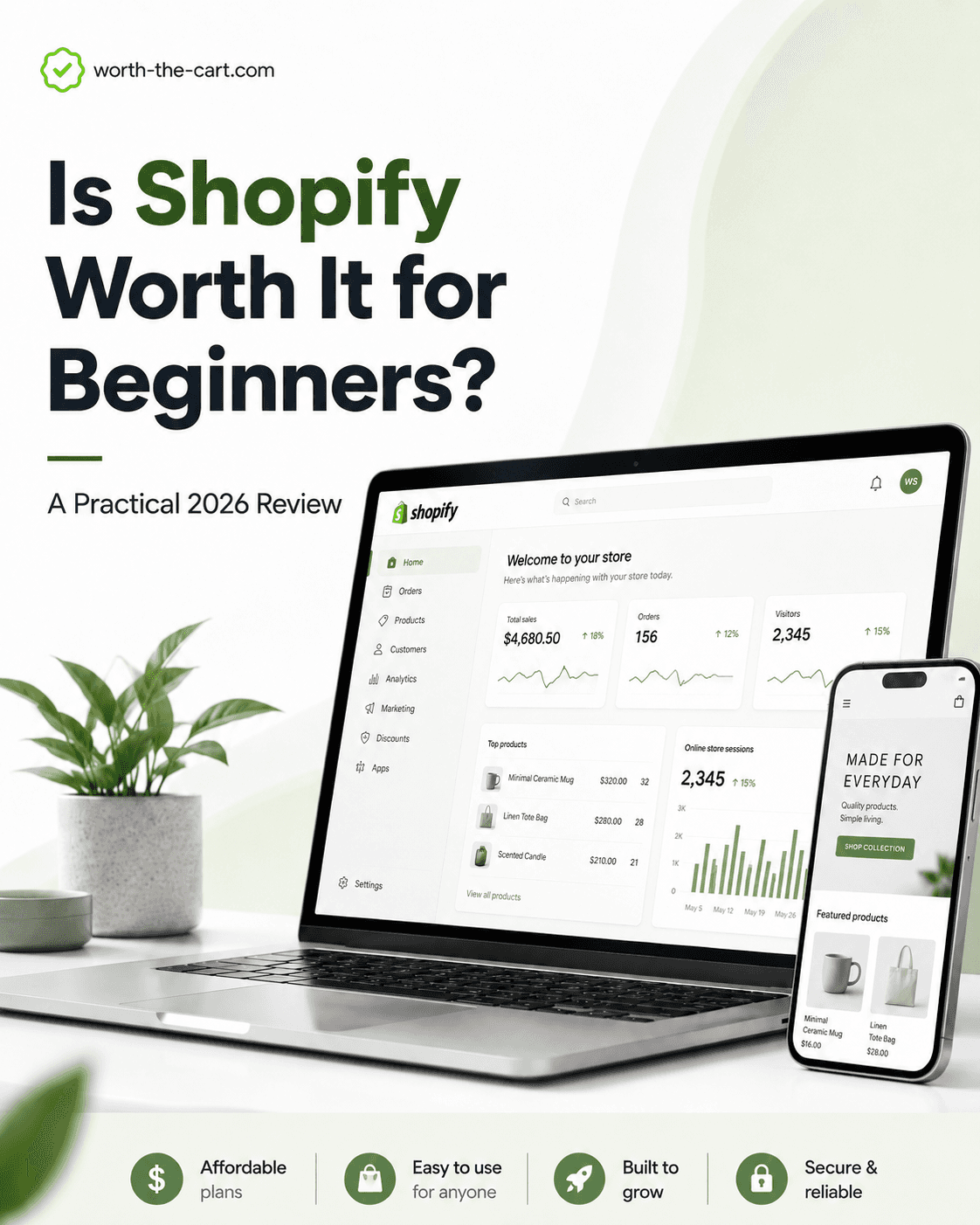
Starting an online store sounds simple until you actually try to do it.
At first, it feels like you only need a product and a website. But once you get into it, you quickly realize there are a lot of small things that need to work together. You need product pages, a checkout, payment processing, shipping settings, taxes, order emails, inventory, discount codes, product images, store design, policies, analytics, and a website that looks trustworthy enough for someone to actually buy from.
That is where Shopify becomes interesting.
Shopify is not just a website builder. It is an ecommerce platform made for people who want to sell products online. That difference matters, especially for beginners. A normal website builder can help you create pages, but Shopify helps you create a store.
For someone starting their first online business, that can save a lot of time and confusion. Instead of trying to connect different tools manually, Shopify gives you the basic structure of an online store in one place: storefront, products, checkout, payments, shipping, orders, apps, analytics, and sales channels.
That does not mean Shopify is perfect. It can become expensive over time, especially if you add too many paid apps, premium themes, or marketing tools too early. It also may be more than you need if you only want a simple personal website or a basic blog. But if the question is “is Shopify worth it for beginners?”, the answer is mostly yes.
Not because Shopify magically creates sales.
Not because it guarantees that your store will succeed.
And not because every beginner should immediately build a full ecommerce brand.
Shopify is worth it for beginners because it makes the technical side of starting an online store much easier. It gives you a real foundation, and for most first-time store owners, that is exactly what they need.
Shopify is especially useful if you want to learn how to sell on Shopify for beginners without getting stuck on coding, checkout setup, payment tools, or complicated website systems.
What Is Shopify?
Shopify is an ecommerce platform that lets you build and run an online store. You can add products, customize your store design, accept payments, manage orders, track inventory, offer discounts, connect apps, and sell through different channels.
For a beginner, the most important part is simple: Shopify gives you the foundation of a real store without requiring you to code one from scratch.
You do not need to build a checkout system. You do not need to manually create a payment flow. You do not need to figure out how to organize products and variants from zero. Shopify already has those ecommerce pieces built in.
That is why Shopify is often one of the first platforms people consider when they search for Shopify for beginners, best ecommerce platform for beginners, how to start an online store with Shopify, or is Shopify good for a first online store.
The platform is made for people who want to sell. That sounds obvious, but it is what separates Shopify from general website tools. You can use other platforms to build nice-looking pages. Shopify’s main job is helping you build a store that can actually take orders.
This is also why Shopify is popular with beginners who want to start small. You can test a product idea, build a simple brand, sell a few items, or slowly grow into a bigger ecommerce business over time.
Key Shopify Details for Beginners
Before you start with Shopify, it helps to understand what the platform actually gives you. Shopify is not just a place to build a nice-looking website. It is made for people who want to sell products online.
With Shopify, you can build your storefront, add products, accept payments, manage orders, track inventory, create discount codes, customize your design, and connect extra tools as your store grows. For a beginner, that is the main advantage: you do not have to piece together five different systems just to make your first online store work.
You do not need to know how to code to launch a basic Shopify store. You can choose a theme, edit the design, add your products, write descriptions, upload images, set prices, and connect payment options from the Shopify dashboard. That makes it much easier for first-time store owners who want to focus on the product and brand instead of the technical setup.
If you are trying to understand how to use Shopify for beginners, the basic process is not too complicated. You choose a theme, add your products, write clear descriptions, upload good images, connect payments, set shipping rules, create important store pages, test the checkout, and then launch.
The most important thing to know is that Shopify is best for people who are serious about selling. It works well for physical products, small brands, print-on-demand stores, dropshipping stores, handmade products, digital products, and beginner ecommerce businesses. It is probably too much if you only want a simple personal website or a basic blog.
For most beginners, the Basic plan is usually the best place to start. You can always upgrade later if your store grows, but you do not need to begin with the most expensive plan. A simple store with clear products, good images, trustworthy pages, and a smooth checkout is much better than an overcomplicated store filled with apps you do not need yet.
The main thing to watch out for is cost. Shopify itself has a monthly price, but the real cost can grow if you add paid apps, premium themes, email tools, paid ads, or extra services too early. Beginners should start lean, keep the store clean, and only add tools when they actually solve a real problem.
In simple terms, Shopify gives beginners the foundation for a real online store. It will not choose your product, create your brand, or bring customers automatically, but it does make the process of building and running an ecommerce store much easier.
Why Shopify Is Good for Beginners
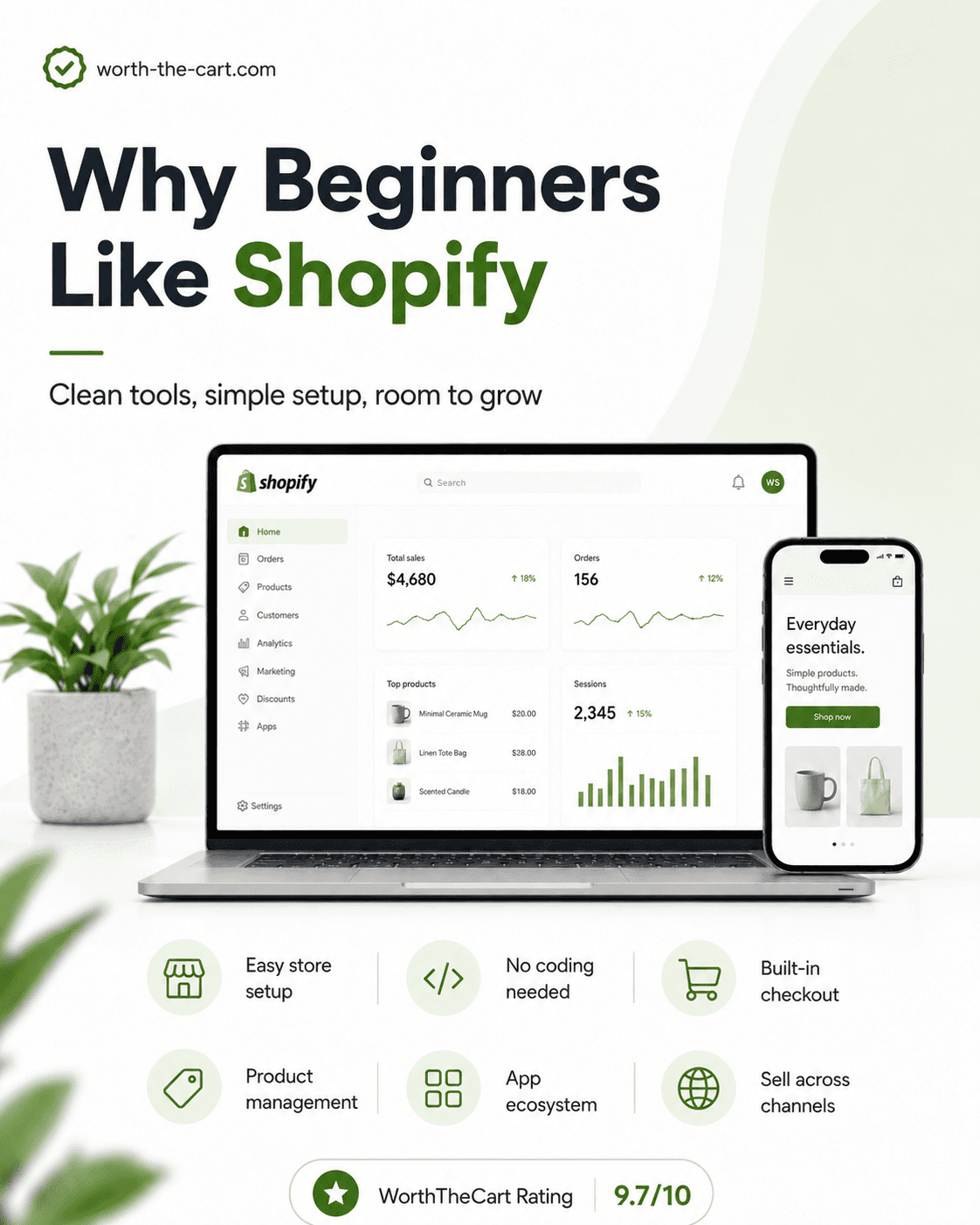
The biggest reason Shopify is good for beginners is that it gives you a clear path.
A lot of beginners get stuck before they even launch. They overthink the website design, the checkout, the product page, the logo, the domain, the apps, the payment processor, and the store structure. Shopify does not solve every business problem, but it gives you a system that makes the process feel less overwhelming.
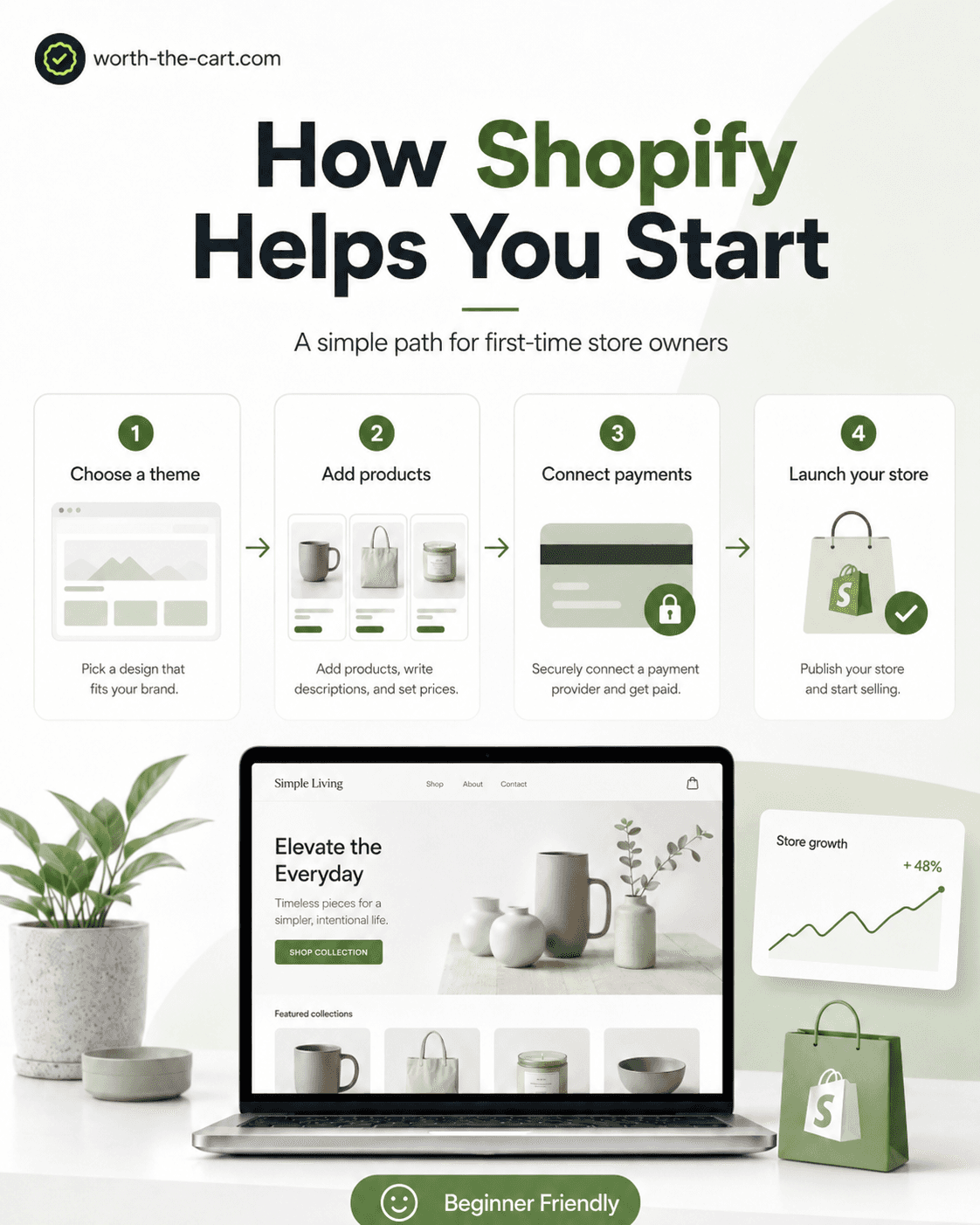
You can start with a theme, add products, write product descriptions, upload images, set prices, create collections, connect payments, set shipping rules, and publish the store. That is much easier than trying to build the entire ecommerce setup from different tools.
This is why Shopify works well for people searching how hard is Shopify to use. The honest answer is that Shopify is not difficult for a basic store, but it still takes effort to make the store good.
You still need to choose a product. You still need good images. You still need clear product descriptions. You still need trust. You still need traffic. Shopify gives you the store system, but it does not automatically bring customers.
That is an important difference.
Shopify makes it easier to build the store. It does not make business easy.
That is also why Shopify is a good platform for beginners who want to learn by doing. You do not need to understand everything before you start. You can launch a simple version of your store, improve the product pages, test your offer, and slowly make the store better based on what visitors do.
The Beginner Experience
The beginner experience on Shopify is one of its biggest strengths.
When you start, the admin area is built around the things a store owner actually needs: products, orders, customers, content, analytics, marketing, discounts, apps, and settings. You are not dropped into a blank website editor with no idea what to do next. Shopify is organized around selling.
That makes it easier to understand what matters.
A beginner can add a product and immediately see how it fits into the store. You can create variants like size, color, material, or style. You can add product photos, pricing, inventory, shipping weight, and descriptions. You can organize products into collections and build pages around them.
This is one of the reasons Shopify is one of the best ecommerce platforms for beginners. It teaches you the structure of an online store as you build.
The editor is not perfect. Some design changes can feel limited unless you use a better theme or apps. But for a first store, those limits can actually help. Beginners often get distracted by design. Shopify pushes you toward the basics: product, price, page, checkout, and order.
That is a good thing.
A beginner does not need a complicated store. A beginner needs a store that is clear, trustworthy, and easy to buy from. Shopify helps you focus on that.
Is Shopify Easy to Use?
Shopify is easy to use compared with building a store from scratch.
It is not effortless.
That is the honest answer.
A beginner can create a basic Shopify store without coding, but making the store look professional still takes time. You need good product photos, clear copy, a trustworthy homepage, strong product pages, policies, shipping information, and a store design that does not feel unfinished.
Shopify gives you the tools, but you still have to make decisions.
For example, a beginner might ask:
What should my homepage say?
How many products should I launch with?
Which theme should I use?
Should I offer free shipping?
What should my return policy be?
Which apps do I actually need?
How do I make the product page look trustworthy?
Shopify cannot answer all of that automatically. But it does make the technical side much easier.
That is why I would describe Shopify as beginner-friendly, not beginner-proof.
A beginner can use it. A beginner can launch with it. But the store still needs effort, taste, and strategy.
If you are searching for how to use Shopify for beginners, the best advice is to keep the first version simple. Do not try to build the perfect store before launching. Start with a clean theme, a clear product offer, simple navigation, good images, and a checkout that works.
What Can Beginners Sell on Shopify?
Beginners can sell many different types of products on Shopify.
You can sell physical products, print-on-demand products, dropshipping products, handmade items, clothing, accessories, digital products, beauty products, fitness products, home goods, coffee products, templates, ebooks, and more.
This flexibility is one of Shopify’s biggest advantages.
For a beginner, the best product is usually not “whatever is trending.” It is something you understand, can explain clearly, and can market to a specific type of buyer. Shopify can handle the store, but you still need a reason for people to buy.
That is where many beginners fail. They think the platform is the business. It is not. Shopify is the tool. The business is the product, brand, offer, content, and customer trust.
If you are wondering about the best products to sell on Shopify for beginners, start with products that are easy to explain, easy to photograph, and easy to ship. Simple products are usually better than complicated products when you are new. You want something where the customer understands the value quickly.
Good beginner-friendly Shopify product ideas can include small home products, simple accessories, niche hobby products, print-on-demand items, beauty tools, pet products, digital templates, fitness accessories, or products connected to a specific lifestyle. The best product is not just the one with high demand. It is the one you can build a clear store and brand around.
That is why Shopify for small business beginners fits naturally here. Shopify is especially useful for beginners who want to take a small business idea seriously. It gives you a real store setup instead of a random payment link or basic landing page.
How to Sell on Shopify for Beginners
Learning how to sell on Shopify for beginners is mostly about understanding the steps in the right order.
First, you need a product or product idea. This does not have to be perfect, but it should solve a problem, fit a specific audience, or feel desirable enough that someone would consider buying it.
Second, you need to build a clear store. The homepage should explain what you sell and why it matters. The product page should make the offer easy to understand. The checkout should feel simple and trustworthy.
Third, you need traffic. This is where many beginners struggle. Shopify gives you the store, but people still need to find it. Traffic can come from SEO, TikTok, Pinterest, Instagram, YouTube, paid ads, email, blogs, or communities. The platform is only one part of the business.
Fourth, you need to improve. Your first version will not be perfect. You may need better photos, clearer product descriptions, better pricing, more trust signals, stronger FAQs, or a better offer.
The best Shopify stores do not become good by accident. They improve over time.
For beginners, the goal should not be to launch a huge store with dozens of products. The goal should be to launch something clear, learn from visitors, and make small improvements.
How to Make Money on Shopify for Beginners
A lot of people ask how to make money on Shopify for beginners, but the honest answer is not as simple as “open a store and wait.”
Shopify gives you the tools to sell, but the money comes from having the right product, the right audience, and the right offer.
A beginner can make money on Shopify by selling physical products, dropshipping products, print-on-demand products, digital downloads, handmade products, niche products, or branded items. But the business still needs demand. People need a reason to buy from you instead of Amazon, a marketplace, or another brand.
The easiest way to think about Shopify is this:
Shopify helps you build the store.
Your product gives people a reason to care.
Your marketing brings people to the store.
Your product page convinces them to buy.
Your customer experience keeps the brand alive.
That is why Shopify can be worth it, but it is not a shortcut.
If you are a beginner, do not start by asking how fast you can make money. Start by asking what problem your store solves, who you are selling to, and why your product deserves attention.
That mindset gives you a much better chance of building something that lasts.
How to Dropship on Shopify for Beginners
Shopify is also popular with people who want to start dropshipping.
Dropshipping means you sell products through your store without holding inventory yourself. When a customer orders, the supplier ships the product. This can make it easier to start because you do not need to buy stock upfront.
That is why many people search for how to dropship on Shopify for beginners.
Shopify can work well for dropshipping because it lets you create a storefront, connect apps, add products, manage orders, and build a brand around the products you choose. But dropshipping is not as easy as many videos make it sound.
The biggest mistake beginners make is choosing random products with no real brand, no trust, and no clear reason to buy. A dropshipping store still needs good product pages, strong images, clear shipping expectations, honest descriptions, and customer support.
You also need to be careful with supplier quality. If shipping is slow, the product is bad, or customers feel misled, the store will not last.
So yes, you can dropship on Shopify as a beginner. But it should be treated like a real business, not a quick trick.
If you want to dropship, start with a focused niche, choose products carefully, test the customer experience, and make sure the store looks trustworthy before sending traffic to it.
Shopify Pricing for Beginners
Pricing is one of the biggest things beginners should understand before starting.
Shopify often has a trial or intro offer, which makes it easy to test the platform without a large upfront cost. But beginners should not only think about the first month. You need to think about the full cost of running the store.
A Shopify store can include:
The Shopify monthly plan
A domain name
Paid apps
A premium theme
Email marketing tools
Product photography
Logo or design work
Ads
Shipping materials
Payment processing fees
Third-party transaction fees if using outside payment providers
This does not mean Shopify is too expensive. It means beginners should treat it like a business tool, not a free hobby platform.
The good part is that you can start lean. You do not need ten paid apps on day one. You do not need a premium theme immediately. You do not need a huge product catalog. A beginner can start with a simple store, one clear product angle, and a clean design.
That is the smartest way to use Shopify as a beginner.
What Shopify Does Well
Shopify’s biggest strength is that it is built for ecommerce from the beginning.
The product system is strong. The checkout is built in. Payments are integrated. Shipping tools are available. Themes are made for stores. Apps can extend the site. The admin dashboard is designed around managing a business, not just editing a page.
Shopify also gives beginners room to grow. A store can start small and later add more products, better themes, email marketing, reviews, upsells, subscriptions, international selling, or in-person selling.
The Shopify App Store is another major advantage. It lets store owners add tools for marketing, design, fulfillment, reviews, SEO, email, subscriptions, live chat, and many other store functions.
That matters because beginners do not always know what they will need later. Shopify gives you a starting point and then lets you add features as the business becomes more serious.
This is one reason Shopify is more future-proof than some cheaper website builders. It is not only good for launching. It is good for growing.
Where Shopify Can Get Expensive
Shopify can become expensive if you are not careful.
The monthly plan is only part of the cost. Apps are often the bigger trap. Many beginners install too many apps too early because they think every store needs popups, countdown timers, reviews, bundles, upsells, email flows, loyalty programs, subscriptions, page builders, analytics tools, and advanced SEO apps.
You do not.
Too many apps can make your store slower, messier, and more expensive.
A beginner should focus on the basics first: a clean theme, strong product pages, good product images, clear shipping information, simple navigation, trust signals, and a checkout that works.
Only add apps when they solve a real problem.
This is one of the most important beginner Shopify tips: do not build an expensive store before you have proof that people want the product.
Start simple. Improve after feedback.
Reasons to Choose Shopify
Choose Shopify if you want a beginner-friendly ecommerce platform that is built specifically for selling.
The first reason to choose Shopify is simplicity. You can build a real online store without coding. That makes it a strong choice for people who want to launch their first ecommerce store without hiring a developer.
The second reason is trust. Shopify is one of the most recognized ecommerce platforms, and its checkout, themes, apps, and admin tools feel more polished than many smaller alternatives.
The third reason is scalability. A beginner can start with a simple store and later grow into more advanced features. You are not locked into a tiny setup.
The fourth reason is the app ecosystem. If you need product reviews, SEO tools, email marketing, print-on-demand, dropshipping, analytics, subscriptions, or design upgrades, there is probably a Shopify app for it.
The fifth reason is that Shopify keeps the store owner focused on ecommerce. It is not trying to be everything. It is trying to help you sell.
Reasons to Avoid Shopify
Avoid Shopify if you are not serious about selling online.
If you only want a personal website, portfolio, blog, or simple landing page, Shopify may be more than you need. A normal website builder could be cheaper and easier for non-ecommerce use.
You should also avoid Shopify if you expect the platform to bring sales by itself. Shopify helps you build the store, but it does not automatically give you traffic. You still need SEO, social media, ads, content, email, or another way to reach customers.
You may also want to avoid Shopify if you are extremely cost-sensitive. While the starter offer can be affordable, the full cost can grow with plans, apps, themes, transaction fees, and marketing.
Finally, avoid Shopify if you want total design freedom without learning anything. Shopify is flexible, but advanced customization may still require better themes, apps, or development work.
Shopify for a First Online Store
For a first online store, Shopify is one of the strongest choices.
The reason is not that Shopify is always the cheapest. It is that Shopify reduces the number of technical problems a beginner has to solve.
A first-time store owner usually needs structure more than unlimited freedom. Shopify gives you that structure. It helps you understand what a product page needs, how orders work, how checkout works, how inventory is managed, and how a store should be organized.
That is why Shopify is good for a first online store, especially if the beginner wants a real store and not just a test page.
A beginner can start with one product or a small product collection. The goal should be to launch cleanly, learn from visitors, and improve the store over time.
You do not need a perfect store on day one. You need a store that looks trustworthy enough to test your idea.
Shopify is good for that.
Shopify for Small Business Beginners
Shopify also makes sense for small business beginners.
If you are starting a small brand, Shopify gives you more than a product page. It gives you a storefront that can become part of your brand identity. You can build collections, publish pages, add policies, create discount codes, collect customer emails, and manage orders from one dashboard.
For small businesses, this matters because trust is everything.
A messy store can make people leave. A confusing checkout can kill sales. A slow or unclear website can make your product feel less serious than it is.
Shopify helps beginners avoid many of those problems by giving them a store system that already feels familiar to online shoppers.
That does not guarantee success. But it gives you a better foundation.
Shopify vs a Marketplace
A beginner might wonder whether they should use Shopify or sell on a marketplace like Amazon, Etsy, eBay, or another platform.
The difference is control.
A marketplace gives you access to existing buyers, but you are building inside someone else’s platform. You follow their rules, compete directly with similar sellers, and often have less control over branding.
Shopify gives you your own store. That means you have more control over design, branding, customer experience, email collection, product pages, and long-term business identity.
The downside is that you need to bring your own traffic. Shopify does not come with a built-in marketplace audience.
For beginners, the best choice depends on the goal.
If you want quick exposure, a marketplace can help. If you want to build a brand, Shopify is better. Some businesses eventually use both.
Shopify vs a Basic Website Builder
A normal website builder may be easier for a simple website, but Shopify is usually better for ecommerce.
That is the key difference.
If you are building a portfolio, personal blog, photography site, or information page, Shopify is probably not the best fit. But if you are building an online store, Shopify’s ecommerce tools are the reason it is worth considering.
A beginner website builder may let you create pages quickly, but Shopify gives you product management, checkout, orders, shipping, apps, payments, and inventory tools that are designed for selling.
This is why a Shopify beginner review should focus on ecommerce, not just website design. Beginners are not only comparing Shopify with other ecommerce platforms. They are often deciding whether they need a real ecommerce platform at all.
For selling products, Shopify makes more sense.
What Beginners Should Do Before Starting Shopify
Before starting Shopify, beginners should answer a few simple questions.
What product am I selling?
Who is the product for?
Why would someone buy from my store instead of somewhere else?
Can I explain the product clearly?
Do I have good product images?
Do I know my shipping costs?
Can I write a clear return policy?
How will I get my first visitors?
These questions matter more than the theme.
Many beginners spend too much time changing colors and fonts before they have a clear product offer. Design matters, but clarity matters more. A clean simple store with a strong offer is better than a beautiful store with no clear reason to buy.
Shopify gives you the store. You still need the business idea.
A Simple Shopify Beginner Setup
A good beginner Shopify store does not need to be complicated.
Start with a clean theme. Add your main product or products. Write clear product descriptions. Use strong images. Create a homepage that explains what the store sells and who it is for. Add About, Contact, Shipping, Returns, and Privacy Policy pages. Set up payments. Test the checkout. Make sure the mobile version looks good.
Then launch.
After that, improve based on what happens. If people visit but do not buy, improve product pages. If people do not visit, work on traffic. If people ask the same questions, add better FAQs. If people abandon checkout, improve trust and shipping clarity.
This is the right way to use Shopify as a beginner. Do not try to build a giant brand before you have feedback.
Start simple and learn.
WorthTheCart Rating
Shopify — 9.7/10
Value: 9.3/10
Shopify is not the cheapest option, but it gives beginners a serious ecommerce foundation. The value is strong if you actually plan to sell products and grow the store.
Use: 9.8/10
Shopify is extremely useful for beginners because it combines store design, products, checkout, payments, shipping, orders, apps, and analytics in one platform.
Build: 9.7/10
The platform feels polished, reliable, and built specifically for ecommerce. The app ecosystem and theme system make it flexible without forcing beginners to code.
Regret: Low
Regret is low if you are serious about building an online store. Regret is higher if you only want a casual website or expect Shopify to create sales automatically.
Final Verdict: Is Shopify Worth It for Beginners?
Yes, Shopify is worth it for beginners who want to build a real online store.
It is not worth it if you only want a basic website. It is not worth it if you have no product idea, no plan for traffic, and no interest in learning ecommerce. It is also not the cheapest possible way to sell something online.
But for beginners who want a serious store, Shopify is one of the best options.
It makes the hard technical parts easier. It gives you a professional ecommerce foundation. It helps you manage products, payments, orders, shipping, apps, and store design from one place. It gives you room to start small and grow later.
That is why Shopify earns a 9.7/10 for beginners.
The best way to think about it is simple:
Shopify will not build the business for you.
But it can give you one of the best beginner-friendly platforms to build that business on.
For a first online store, that is worth a lot.
Pros
Shopify is beginner-friendly, polished, scalable, and focused specifically on ecommerce. It gives beginners a real online store, themes, product pages, checkout, payments, order management, shipping tools, apps, sales channels, analytics, and room to grow.
Cons
Shopify is not free long term, and costs can increase with paid themes, apps, transaction fees, email tools, product photography, ads, or advanced store features. It is also more ecommerce-focused than a normal website builder, so it may be too much if you only want a basic personal website.
WorthTheCart? Final Verdict
Shopify earns a 9.7/10 for beginners because it removes many of the hardest parts of starting an online store. It is not the cheapest possible way to sell online, but it is one of the most complete and beginner-friendly options if you want a real ecommerce store that can grow with you.